
CRM vs DMS for Auto Dealers: Which One Does Your Dealership Really Need? Many automobile dealerships begin their digital journey by investing in software. Some start with a Customer Relationship Management (CRM) system to organize leads and improve follow-ups. Others invest in a Dealer Management System (DMS) to manage inventory, billing, accounting, and day-to-day operations. The challenge begins when dealership owners assume that both systems perform the same role. Although CRM and DMS work closely together, they solve very different business problems. Choosing the wrong software can create operational gaps, duplicate work, and unnecessary expenses. Understanding how each system works helps dealerships invest in technology that supports both immediate requirements and future growth. This guide explains the differences between CRM and DMS, where each solution adds value, and why many successful dealerships eventually use both as part of a connected dealership ecosystem. What is a CRM for Auto Dealers? A Customer Relationship Management system focuses on customers and sales activities. Its primary objective is to help dealerships attract leads, manage enquiries, improve follow-ups, and increase vehicle sales. A good dealer CRM software stores customer information in one place, making it easier for sales teams to understand buyer preferences and maintain communication throughout the sales journey. Typical CRM features include: Lead capture from websites and campaigns Sales enquiry management Follow-up reminders Customer communication history Test drive scheduling Sales pipeline management Lead assignment Customer retention activities For dealerships investing in digital marketing, a CRM ensures that every lead receives timely attention. What is a Dealer Management System (DMS)? A dealer management system is designed to manage the complete operations of an automobile dealership. While CRM focuses on customer relationships, a DMS manages the business behind every sale. Modern dealership management software connects multiple departments on one platform, allowing dealerships to operate efficiently without relying on disconnected systems. A typical DMS includes: Vehicle inventory management Sales management Dealer CRM Finance and Insurance Accounting GST billing Workshop management Spare parts inventory Warranty tracking Multi-branch management Employee performance Reports and dashboards Instead of switching between multiple applications, dealership teams work from one centralized system. CRM vs DMS: Understanding the Core Difference The easiest way to understand the difference is by looking at their primary purpose. A CRM answers the question: “How can we sell more vehicles?” A DMS answers the question: “How do we manage the entire dealership efficiently?” CRM is primarily customer-focused. DMS is business-focused. CRM helps generate revenue through better customer engagement. DMS helps improve profitability by streamlining operations across departments. Rather than replacing each other, both systems complement one another. Feature Comparison Feature CRM DMS Lead Management ✔ ✔ Customer Database ✔ ✔ Vehicle Inventory ✘ ✔ Billing & Invoicing ✘ ✔ GST Management ✘ ✔ Accounting ✘ ✔ Service Workshop ✘ ✔ Spare Parts ✘ ✔ Warranty Management ✘ ✔ Multi-Branch Management Limited ✔ Business Reporting Sales Reports Complete Dealership Reports The comparison clearly shows that CRM covers only one part of dealership operations, while a Dealer Management System manages the entire business. Book Your DealerSetu Demo Today When is CRM Enough? For some businesses, investing in CRM first makes sense. Examples include: New dealerships with limited operations Independent used car dealers Vehicle brokers Sales-focused businesses without workshops Dealerships outsourcing accounting In these situations, the priority is improving customer acquisition and managing enquiries efficiently. However, as operations grow, CRM alone often becomes insufficient. When Does a Dealership Need a DMS? As dealerships expand, they begin managing larger inventories, additional employees, finance operations, workshops, spare parts, and multiple branches. At this stage, relying only on CRM creates operational challenges. A car dealership management software becomes essential when dealerships need to: Track inventory in real time Generate GST invoices Manage finance approvals Handle workshop operations Monitor employee productivity Produce management reports Control multiple branches Improve inventory turnover These operational capabilities fall outside the scope of a traditional CRM system. Indian Dealerships Face Different Challenges The Indian automobile market is highly competitive and operationally complex. According to the Society of Indian Automobile Manufacturers (SIAM), India is one of the world’s largest automobile markets, making efficient dealership operations increasingly important. Dealerships often manage: High inventory volumes Finance partners Insurance partners GST compliance Multiple OEM requirements Regional warehouses Branch transfers High customer expectations Managing these processes through separate software applications often creates duplicate work and reporting inconsistencies. This is one reason why many dealerships across India are moving toward integrated automobile dealership management software instead of relying solely on standalone CRM platforms. Should You Choose CRM or DMS? The answer depends on your dealership’s size, operational complexity, and long-term business goals. A dealership that only wants to improve lead management and customer follow-ups may find a CRM sufficient during the early stages. However, once inventory grows, departments expand, and financial processes become more complex, a CRM alone cannot manage the entire business. A Dealer Management System becomes essential when different teams need access to the same information in real time. Sales, inventory, finance, workshop, customer service, and management all benefit from working on a single platform instead of multiple disconnected applications. The decision should not be based on software cost alone. It should focus on operational efficiency, customer experience, and future scalability. CRM vs DMS: Which One Fits Your Dealership? Business Requirement CRM DMS Capture online leads ✔ ✔ Manage customer enquiries ✔ ✔ Sales follow-up reminders ✔ ✔ Vehicle inventory management ✘ ✔ Dealer inventory management system ✘ ✔ Vehicle booking Limited ✔ Delivery management ✘ ✔ Finance and insurance ✘ ✔ GST billing ✘ ✔ Dealership accounting ✘ ✔ Workshop management ✘ ✔ Spare parts inventory ✘ ✔ Warranty management ✘ ✔ Multi-branch operations Limited ✔ Management dashboard Limited ✔ Employee performance tracking ✘ ✔ For most growing dealerships, a DMS delivers greater long-term value because it supports every department instead of focusing only on sales. Common Challenges Faced by Dealerships Using Only CRM Many dealerships begin with a CRM because it helps organize customer enquiries. While this improves sales processes, operational
How Vehicle Inventory Management Software Reduces Dead Stock and Overstocking
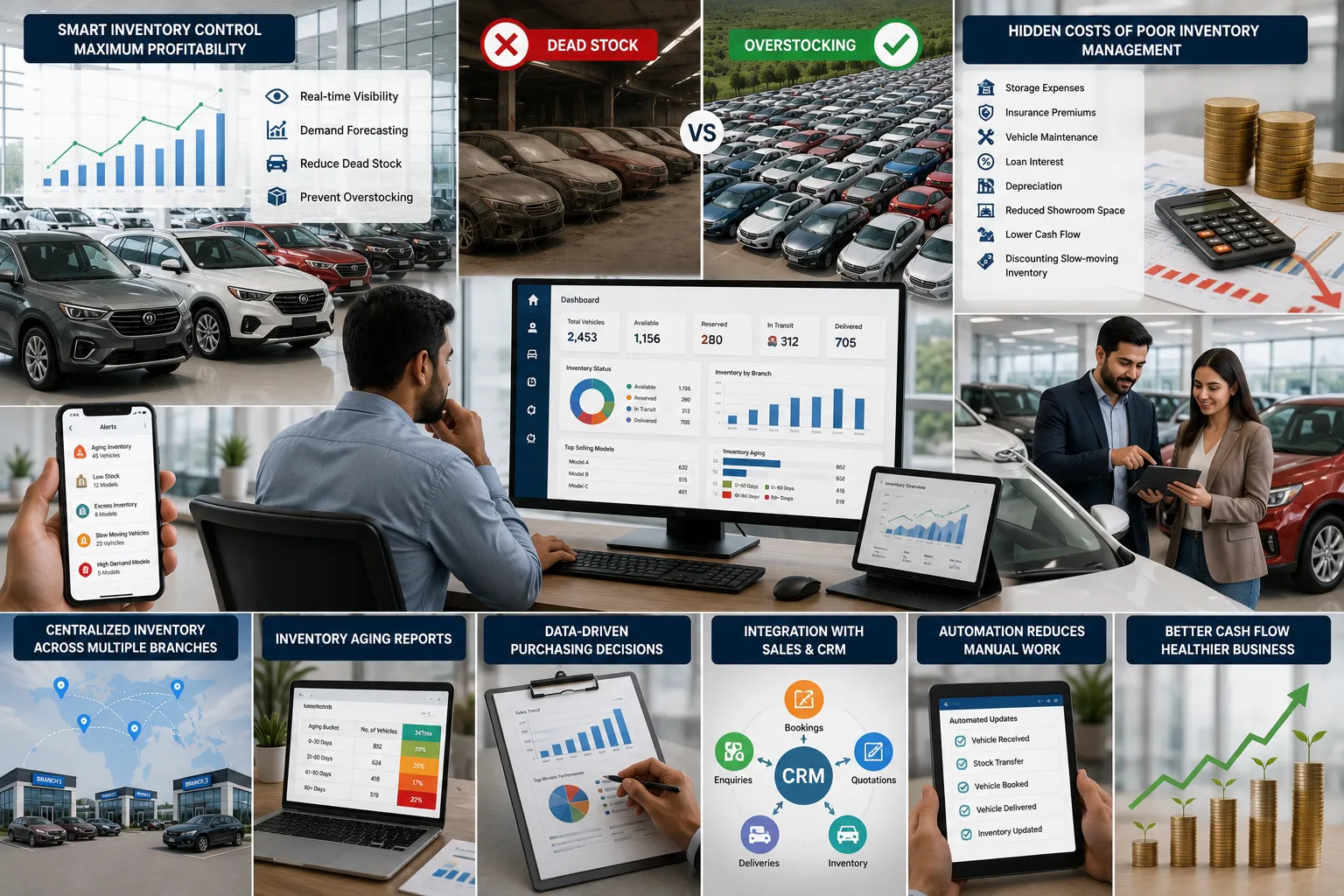
For every automobile dealership, inventory is one of the largest business investments. Every vehicle sitting in the showroom or stockyard represents capital that should generate revenue as quickly as possible. However, many dealerships struggle with two common inventory challenges: dead stock and overstocking. Dead stock refers to vehicles that remain unsold for long periods, while overstocking occurs when dealerships purchase more inventory than market demand requires. Both problems tie up cash flow, increase storage costs, and reduce overall profitability. These issues often arise because dealerships rely on manual inventory tracking, outdated spreadsheets, or disconnected systems that provide limited visibility into stock movement and customer demand. Fortunately, modern vehicle inventory management software helps dealerships overcome these challenges by providing real-time inventory visibility, demand forecasting, automated stock monitoring, and intelligent reporting. Instead of making purchasing decisions based on assumptions, dealerships can rely on accurate data to maintain the right inventory levels. Let’s understand how the right inventory management solution can significantly reduce dead stock and prevent overstocking. Understanding Dead Stock in Automobile Dealerships Dead stock refers to vehicles that remain unsold for an extended period. These vehicles occupy valuable showroom space while continuously increasing operational costs. Several factors contribute to dead stock, including inaccurate demand forecasting, changing customer preferences, seasonal fluctuations, and poor inventory planning. Every additional day a vehicle remains unsold increases expenses related to insurance, maintenance, financing, depreciation, and storage. Over time, dealerships may need to offer heavy discounts to clear aging inventory, directly impacting profit margins. Without proper inventory monitoring, identifying slow-moving vehicles becomes difficult until financial losses have already occurred. What Causes Overstocking? Overstocking happens when dealerships purchase more vehicles than customers are likely to buy within a reasonable period. Many dealerships order inventory based on assumptions instead of actual sales trends. Some also purchase excess stock during promotional offers or to prepare for anticipated demand that never materializes. Common reasons for overstocking include: Lack of sales forecasting Poor inventory visibility Duplicate vehicle purchases Inefficient stock transfers Limited reporting Seasonal demand miscalculations Overstocking not only increases carrying costs but also limits the dealership’s ability to invest in faster-moving vehicle models. The Hidden Cost of Poor Inventory Management Many dealership owners only consider the purchase price of a vehicle when calculating inventory costs. In reality, every unsold vehicle continues to generate additional expenses. These costs include: Storage expenses Insurance premiums Vehicle maintenance Loan interest Depreciation Reduced showroom space Lower cash flow Discounting slow-moving inventory Without an effective dealer inventory management system, these hidden costs continue to grow while reducing overall profitability. Real-Time Inventory Visibility Improves Decision Making One of the biggest advantages of vehicle inventory management software is complete visibility into inventory. Instead of manually checking spreadsheets or contacting multiple branches, dealership managers can instantly see: Available vehicles Reserved vehicles Delivered vehicles In-transit inventory Aging inventory Branch-wise stock Real-time visibility enables dealerships to make informed purchasing decisions and avoid ordering vehicles that are already available within the organization. Better Demand Forecasting One of the primary reasons dealerships accumulate dead stock is inaccurate forecasting. Modern automobile inventory management software analyzes historical sales data, seasonal buying patterns, regional demand, and inventory turnover rates to predict future inventory requirements. For example, if SUVs consistently sell faster during festive seasons while premium sedans move more slowly, dealership managers can adjust purchasing strategies accordingly. Instead of relying on guesswork, dealerships use actual business data to optimize inventory levels. Faster Inventory Turnover Inventory turnover is one of the most important performance indicators for any dealership. Higher turnover means vehicles are sold quickly, reducing financing costs and improving cash flow. A modern vehicle inventory tracking software highlights slow-moving inventory before it becomes dead stock. Managers can launch promotional campaigns, transfer vehicles between branches, or adjust pricing strategies to improve sales. Faster inventory turnover directly contributes to healthier business performance. Centralized Inventory Across Multiple Branches Many dealership groups operate multiple showrooms across different cities. Without centralized inventory management, one branch may overstock a particular model while another branch struggles to meet customer demand. A cloud-based dealership inventory management software allows managers to monitor inventory across every branch from a single dashboard. Instead of purchasing additional vehicles unnecessarily, dealerships can simply transfer inventory between locations, reducing overstocking while improving vehicle availability. Automated Stock Alerts Manual inventory monitoring often causes managers to react too late. Modern vehicle stock management software automatically sends alerts for: Aging inventory Low stock Excess inventory Slow-moving vehicles High-demand models These notifications help dealerships take timely action before inventory problems become costly. Book Your DealerSetu Demo Today Inventory Aging Reports Help Reduce Dead Stock One of the most valuable features of vehicle inventory management software is inventory aging analysis. Every vehicle in stock is categorized based on how long it has remained in the dealership. Managers can quickly identify vehicles that have been in inventory for 30, 60, 90, or even 180 days. Instead of waiting until these vehicles become difficult to sell, dealerships can take proactive measures such as running promotional offers, adjusting prices, increasing marketing efforts, or transferring inventory to another branch where demand is higher. Regular inventory aging reports help dealerships maintain healthier stock levels while reducing unnecessary carrying costs. Data-Driven Purchasing Decisions Successful dealerships rely on data rather than assumptions. A modern automotive inventory management solution provides detailed reports that help managers understand: Best-selling vehicle models Slow-moving inventory Seasonal buying trends Branch-wise sales performance Vehicle turnover rates Purchase history These insights help dealerships order the right vehicles in the right quantities. Instead of overstocking popular assumptions, purchasing teams can align inventory with actual customer demand. Integration with Sales and CRM Inventory management becomes even more effective when connected with sales and customer relationship management. Modern inventory management for car dealerships integrates inventory with CRM, enquiries, bookings, quotations, and vehicle deliveries. When a vehicle is booked or sold, inventory updates automatically without requiring manual intervention. Sales teams can instantly check vehicle availability while speaking with customers, reducing booking errors and improving response times. This integration also allows managers to understand
Top Features Every Automotive Dealer Management Software Should Include
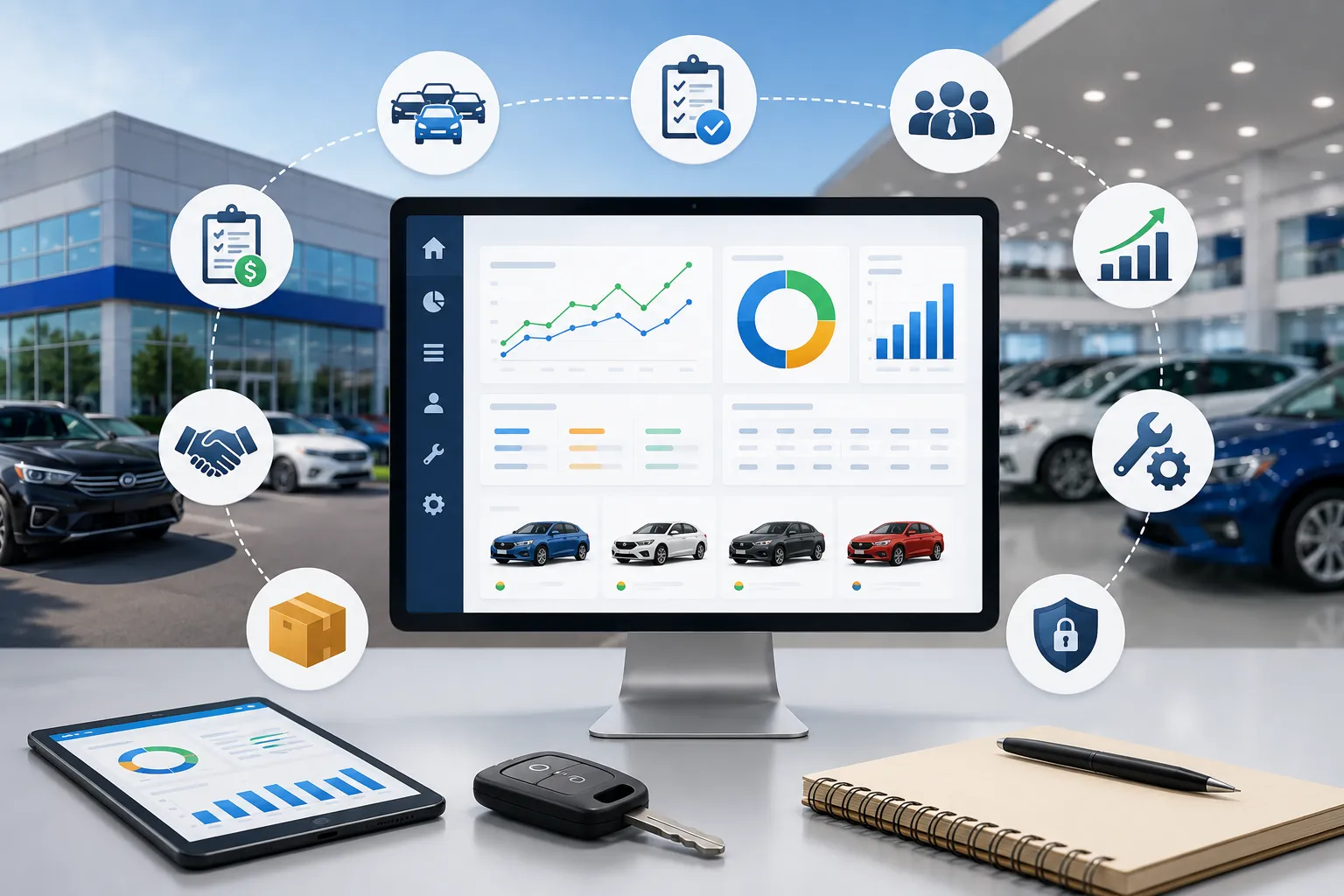
Running a successful automobile dealership involves much more than selling vehicles. Dealerships must manage inventory, track customer inquiries, monitor sales performance, handle finance and accounting, schedule vehicle deliveries, oversee service operations, and generate business reports. Managing these activities manually or through multiple disconnected applications often leads to delays, errors, and poor customer experiences. This is why dealerships are increasingly investing in automotive dealer management software. A modern Dealer Management System (DMS) brings every department together on a single platform, helping dealerships improve efficiency, automate routine tasks, and make better business decisions. However, not all dealership software offers the same capabilities. Before investing in a solution, it is important to understand the features that truly add value to your business. Here are the top features every dealership should look for when choosing the right software. 1. Centralized Inventory Management Inventory is one of the largest investments for any dealership. Without proper tracking, dealerships can experience stock shortages, duplicate bookings, or aging inventory. A modern automotive dealer management software should provide real-time inventory visibility across all locations. Users should be able to track vehicle availability, transfers, bookings, deliveries, VIN numbers, chassis numbers, and stock movement from one dashboard. Accurate inventory management helps dealerships improve planning, reduce carrying costs, and deliver vehicles faster. 2. Integrated Dealer CRM Customers expect quick responses and personalized communication throughout their buying journey. An integrated dealer CRM software allows dealerships to capture leads from multiple sources, assign them to sales representatives, schedule follow-ups, send reminders, and monitor conversions. A good CRM also stores customer history, making it easier to build long-term relationships and improve retention. 3. Sales Management and Lead Tracking Managing vehicle sales manually often results in missed opportunities and inconsistent follow-ups. The best dealership management software should help sales teams track every stage of the sales cycle, from enquiry and quotation to booking and final delivery. Managers should also be able to monitor salesperson performance, conversion rates, and pending opportunities through real-time dashboards. 4. Finance and Accounting Integration Sales and finance work closely together in every dealership. Separate accounting systems often create duplicate work and reporting errors. A reliable dealership accounting software should support invoicing, GST management, collections, payment tracking, expenses, vendor management, and financial reporting. Integrated accounting improves accuracy while reducing manual data entry. 5. Multi-Branch Management Growing dealerships often operate multiple showrooms, warehouses, and service centers. A quality automobile dealership management software should provide centralized control over every branch from a single dashboard. Managers should be able to monitor inventory, sales performance, employee productivity, and financial reports across all locations without switching between different systems. 6. Real-Time Reporting and Analytics Making decisions without accurate reports can lead to costly mistakes. Modern automotive dealership software should include dashboards that provide insights into: Vehicle sales Inventory status Revenue Pending deliveries Customer enquiries Employee performance Branch performance These reports help dealership owners make faster and more informed business decisions. 7. Workflow Automation Many dealership processes involve repetitive manual work, including stock updates, approval requests, customer notifications, invoice generation, and delivery scheduling. Automation eliminates repetitive tasks and reduces the chances of human error. The best dealership management software should automate routine workflows so employees can focus on customer service and sales. 8. Service and Workshop Management Customer relationships continue long after a vehicle is sold. An effective Dealer Management System should include service scheduling, job card management, technician assignment, warranty tracking, spare parts inventory, and service history. This helps dealerships improve after-sales support while generating additional revenue from service operations. 9. Mobile and Cloud Accessibility Modern dealerships need flexibility. Cloud-based dealer management system solutions allow employees to access important information securely from any location using laptops, tablets, or smartphones. Sales executives can update customer enquiries, managers can review reports, and executives can monitor operations even when they are away from the dealership. Cloud deployment also reduces IT maintenance costs while improving data security. 10. Role-Based User Access Every employee does not require access to every feature. The software should allow administrators to define permissions based on job roles. For example: Sales teams should access CRM and quotations. Finance teams should manage accounting. Inventory teams should update stock. Managers should access reports and approvals. Role-based access improves both security and operational efficiency. 11. Enterprise Scalability As dealerships grow, their software should grow with them. An enterprise dealer management system should support additional branches, users, departments, and business processes without requiring a complete software replacement. Scalable solutions protect long-term investments while supporting business expansion. 12. Easy Integration with Other Business Tools Most dealerships use multiple applications for communication, accounting, marketing, payment collection, and customer support. The right dealer management solutions should integrate easily with CRM tools, accounting software, payment gateways, SMS platforms, WhatsApp, email services, and business intelligence tools. Good integrations reduce duplicate work and improve operational efficiency. Book Your DealerSetu Demo Today Why DealerSetu Is Built for Modern Dealerships DealerSetu combines all the essential features dealerships need in one powerful platform. From inventory management and Dealer CRM to accounting, finance, reporting, approvals, service management, and multi-branch operations, DealerSetu helps dealerships simplify daily operations while improving efficiency. Whether you manage a single showroom or a growing dealer network, DealerSetu provides the visibility and automation needed to deliver better customer experiences and support long-term business growth. Conclusion Choosing the right automotive dealer management software is an important investment for any dealership. The ideal solution should do more than simply record transactions. It should help improve productivity, automate operations, provide meaningful business insights, and support future growth. Before making a decision, evaluate the software based on the features that matter most to your dealership. A comprehensive solution like DealerSetu can help reduce manual work, improve operational efficiency, and provide complete control over every aspect of dealership management from a single platform. Frequently Asked Questions 1. What is automotive dealer management software? Automotive dealer management software is a centralized platform that helps dealerships manage inventory, sales, CRM, accounting, service operations, reporting, and customer relationships. 2. Why do dealerships need dealer management software?
Top 12 Challenges Car Dealerships Face in Inventory Management (And How to Solve Them)
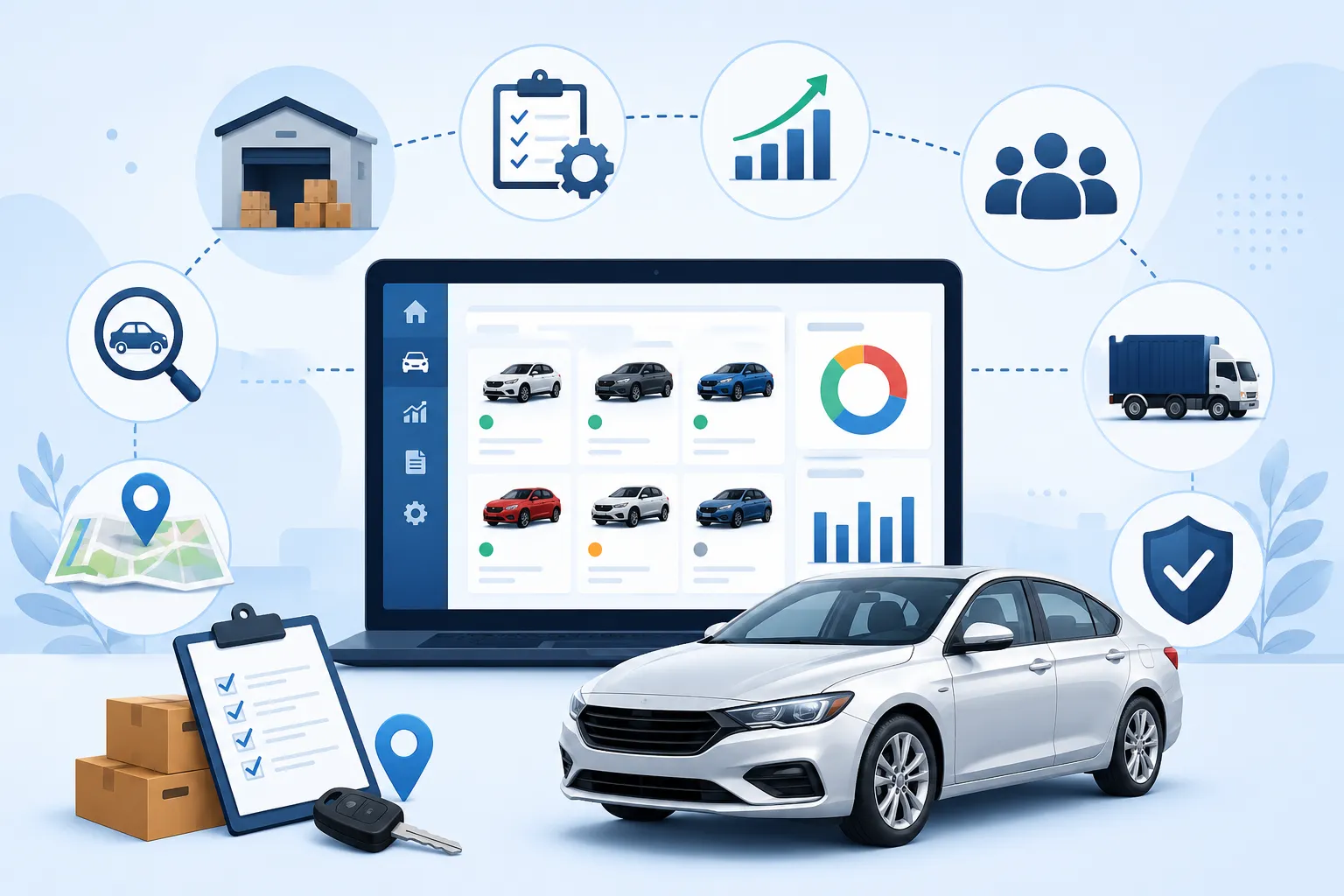
Managing inventory is one of the biggest responsibilities for any car dealership. Every vehicle represents a significant investment, and even small inventory mistakes can lead to lost sales, unhappy customers, and unnecessary expenses. As dealerships grow, managing hundreds of vehicles across multiple locations becomes even more challenging. Many dealerships still rely on spreadsheets or disconnected tools to monitor inventory. While these methods may seem manageable initially, they often result in duplicate records, inaccurate stock counts, delayed updates, and poor coordination between departments. This is where vehicle inventory management software makes a difference. A modern solution gives dealerships complete visibility into their inventory, automates routine tasks, and helps teams make faster and more informed decisions. Let’s explore the twelve most common inventory management challenges dealerships face and how technology can solve them. 1. No Real-Time Inventory Visibility One of the biggest problems dealerships face is not knowing the exact status of every vehicle. Sales executives may promise a vehicle to a customer only to discover that it has already been booked, transferred, or sold. Without real-time visibility, dealerships struggle to provide accurate information and often lose customer confidence. Using vehicle inventory management software ensures inventory is updated instantly whenever a vehicle is received, booked, transferred, or delivered. This allows every department to work with accurate information. 2. Overstocking and Understocking Keeping too much inventory increases storage costs and locks valuable capital in unsold vehicles. Keeping too little inventory results in missed sales opportunities when popular models are unavailable. Modern automobile inventory management software analyzes sales trends and inventory movement, helping dealerships maintain the right stock levels while reducing unnecessary carrying costs. 3. Manual Inventory Updates Many dealerships still depend on Excel sheets or manual registers to update inventory. This process consumes time and increases the chances of human error. Common issues include duplicate records, incorrect stock counts, delayed updates, and missing vehicle details. A centralized dealer inventory management system automates inventory updates, reducing manual work while improving accuracy. 4. Difficulty Tracking Vehicle Movement Vehicles move between warehouses, showrooms, service centers, and customers throughout their lifecycle. Tracking these movements manually is difficult and often leads to misplaced inventory. A reliable vehicle inventory tracking software records every vehicle movement, making it easy to locate vehicles and maintain complete inventory history. 5. Managing Inventory Across Multiple Branches Multi-location dealerships often struggle to balance inventory between branches. One showroom may have excess stock while another faces shortages. A cloud-based dealership inventory management software provides centralized inventory visibility across all locations, allowing managers to transfer stock where it is needed most. 6. Slow Vehicle Allocation Manual vehicle allocation delays bookings and deliveries because employees need to verify stock availability before confirming sales. A smart vehicle stock management software automatically allocates available vehicles based on inventory status, branch location, and customer requirements, helping dealerships speed up the sales process. 7. Poor Demand Forecasting Many dealerships continue ordering vehicles based on assumptions instead of actual market demand. This often results in aging inventory or frequent stock shortages. Modern automotive inventory management solutions use historical sales data, seasonal trends, and inventory reports to improve purchasing decisions. Better forecasting helps dealerships maintain healthy inventory levels while reducing unnecessary investments. 8. Poor Coordination Between Departments Inventory, sales, finance, and service teams often work on separate systems. This creates communication gaps, duplicate work, and inconsistent reports. A modern car dealership inventory management software connects inventory with CRM, accounting, finance, and service operations. Every department works from the same data, improving collaboration and reducing errors. 9. Limited Reporting and Business Insights Without detailed reports, dealership owners find it difficult to identify slow-moving inventory, top-selling models, or branch performance. Advanced automotive inventory software provides dashboards, inventory aging reports, stock movement reports, and sales analytics that support faster and more informed business decisions. 10. High Inventory Carrying Costs Unsold vehicles increase insurance costs, financing charges, storage expenses, and maintenance costs. Aging inventory also reduces profitability. Using inventory software for automobile dealers, dealerships can identify slow-moving vehicles early and take corrective action through promotions, transfers, or revised purchasing strategies. 11. Compliance and Vehicle Documentation Challenges Every vehicle comes with important information such as VIN numbers, chassis numbers, registration documents, invoices, and delivery records. Managing these documents manually increases the risk of errors and delays. Modern auto inventory management software stores vehicle information digitally, making documentation easier to access while reducing paperwork and improving compliance. 12. Poor Customer Experience Customers expect dealerships to provide instant information about vehicle availability. Incorrect inventory records often lead to delivery delays, canceled bookings, and disappointed buyers. Accurate inventory management for car dealerships ensures sales teams always have updated stock information, helping them provide faster responses and a smoother buying experience. Book Your DealerSetu Demo Today How DealerSetu Helps Dealerships Manage Inventory DealerSetu is a comprehensive vehicle inventory management software built specifically for automobile dealerships. It helps businesses manage inventory, sales, CRM, finance, service, and reporting from a single platform. With real-time inventory tracking, multi-branch visibility, automated workflows, and intelligent reporting, DealerSetu helps dealerships reduce manual work, improve inventory accuracy, and deliver a better customer experience. Conclusion Inventory management is much more than keeping track of vehicles. It directly affects customer satisfaction, profitability, and business growth. Manual processes and disconnected systems make it difficult to maintain accurate inventory, especially as dealerships expand. Investing in the right vehicle inventory management software allows dealerships to automate stock management, improve visibility, reduce operational costs, and make smarter business decisions. Whether you manage a single showroom or multiple branches, adopting a modern inventory management solution can give your dealership a significant competitive advantage. Frequently Asked Questions 1. What is vehicle inventory management software? Vehicle inventory management software helps dealerships track, manage, and monitor vehicle stock in real time while reducing manual work and improving inventory accuracy. 2. Why is inventory management important for car dealerships? Effective inventory management helps reduce carrying costs, prevent stock shortages, improve customer satisfaction, and increase profitability. 3. How does automobile inventory management software improve dealership operations? It automates stock updates,

What Is Automotive DMS Software? A Complete Guide for Indian Dealerships
Every automotive dealership runs on information. Vehicle availability, customer history, service schedules, parts inventory, and financial records are the lifeblood of your business. But when this information lives in scattered spreadsheets, disconnected software, or paper files, your dealership slows down. Mistakes creep in. Customers get frustrated. An Automotive Dealer Management System, or DMS, solves this problem. It is the central platform that brings every department of a dealership together. Sales, service, parts, finance, and accounting all operate from a single source of truth. Think of a DMS as the operating system for your dealership. It is not just one piece of software. It is an integrated suite of tools designed specifically for the unique workflows of automotive retail. When your people, processes, and data work in sync, your dealership runs faster, smarter, and more profitably. This guide breaks down everything you need to know about automotive DMS software: what it does, why it matters, and how it can transform your dealership. What Exactly Is a Dealer Management System? A DMS is specialised software built to manage the daily operations of an automotive dealership. It connects your front-office customer-facing activities with your back-office accounting and compliance functions. The core job of a DMS is to create a single source of truth for all your dealership data. Instead of maintaining separate systems for sales, service, inventory, and accounting, a DMS integrates everything into one platform. This integration eliminates data silos, reduces manual data entry, and ensures that every department works with the same up-to-date information. For a dealership in India, the DMS handles processes specific to the local market. This includes GST-compliant invoicing, integration with OEM reporting systems, and communication channels like WhatsApp that Indian customers prefer. The Core Modules of an Automotive DMS A comprehensive DMS is not a single tool. It is a collection of integrated modules, each designed for a specific function within the dealership. Sales Management The sales module captures leads from every channel: showroom visits, phone calls, website enquiries, and third-party portals. It assigns leads to sales representatives, tracks follow-up activities, and manages the entire sales process from enquiry to delivery. Test drive scheduling, quotation generation, and finance application tracking are all handled within this module. Managers get real-time visibility into the sales pipeline, conversion rates, and individual salesperson performance. Service Management Service operations are often the largest revenue generator after vehicle sales. A service module manages appointment booking, digital vehicle check-in, job card creation, and technician assignment. The system tracks each job in real time, allowing service advisors to provide accurate updates to waiting customers. Digital estimates can be shared with customers for approval before work begins, reducing disputes and improving trust. Spare Parts Inventory Inventory management is critical for profitability in the parts department. The DMS tracks stock levels, manages supplier orders, and handles procurement. Barcode scanning reduces errors in physical inventory counts. Automated reorder points ensure popular parts are always in stock while preventing overstocking of slow-moving items. The system also tracks parts usage patterns to inform purchasing decisions. Customer Relationship Management The CRM module maintains a complete history of every customer: vehicles owned, service records, communication preferences, and past interactions. Automated service reminders, birthday greetings, and promotional offers help dealerships stay connected with customers. For Indian dealerships, integration with WhatsApp and SMS is particularly important for reaching customers on their preferred channels. Accounting and Compliance The accounting module handles invoicing, purchase orders, expense tracking, and tax calculations. GST compliance is built into the system, ensuring that invoices meet government requirements. The module also integrates with financing and insurance processes, streamlining vehicle purchase and loan processing for customers. Reporting and Analytics Real-time dashboards provide visibility into every aspect of the dealership. Sales performance, service revenue, inventory turnover, and lead conversion rates are available on demand. Customisable reports help dealership leaders make data-driven decisions without waiting for manual spreadsheet consolidation. Losing leads due to manual follow-ups? See how DealerSetu automates sales tracking and improves conversion rates. Book Your DealerSetu Demo Today Why Indian Dealerships Need DMS Software The Indian automotive retail landscape has unique characteristics that make DMS adoption particularly valuable. Regulatory Complexity India’s tax system requires precise invoicing and reporting. A DMS automates GST-compliant billing, generates required reports, and reduces the risk of costly compliance errors. Fragmented Customer Channels Indian customers interact with dealerships through multiple channels: showroom visits, phone calls, WhatsApp, and online platforms. A DMS consolidates all these interactions, ensuring consistent follow-up and a seamless customer experience. Multi-Location Operations Many Indian dealership groups operate across multiple cities. A DMS provides unified visibility into stock, sales, and service performance across all locations from a single dashboard. Rapidly Evolving Market India’s automotive market is one of the fastest growing globally. Dealerships need systems that can scale with their business. Cloud-based DMS platforms offer the flexibility to add new locations, vehicles, and users without significant infrastructure investment. Integration with OEM Systems Authorised dealerships must report to their manufacturers. A DMS with OEM integration capabilities simplifies warranty claims, compliance reporting, and other manufacturer requirements. Is your dealership ready to scale? DealerSetu is built for Indian dealerships at every growth stage. Talk to our experts today. Book Your DealerSetu Demo Today The Business Case for DMS: From Cost to Investment Dealership owners often view DMS as an expense. This perspective misses the value that a well-implemented system delivers. Improved Lead Conversion: Automated follow-ups ensure no lead falls through the cracks. Faster response times directly impact conversion rates in a competitive market. Higher Service Revenue: Streamlined service operations increase workshop throughput and customer satisfaction, leading to repeat business. Reduced Inventory Costs: Better parts and vehicle inventory management reduces holding costs and write-offs. Better Manager Productivity: Automated reporting frees managers from manual data consolidation, allowing them to focus on coaching and strategy. Stronger Customer Retention: Consistent, personalized communication builds loyalty and drives repeat visits. Cloud-Based vs On-Premise DMS: Which Is Right for You? Feature Cloud-Based DMS On-Premise DMS Upfront Cost Low (subscription based) High (hardware + licenses) IT Infrastructure Minimal (vendor
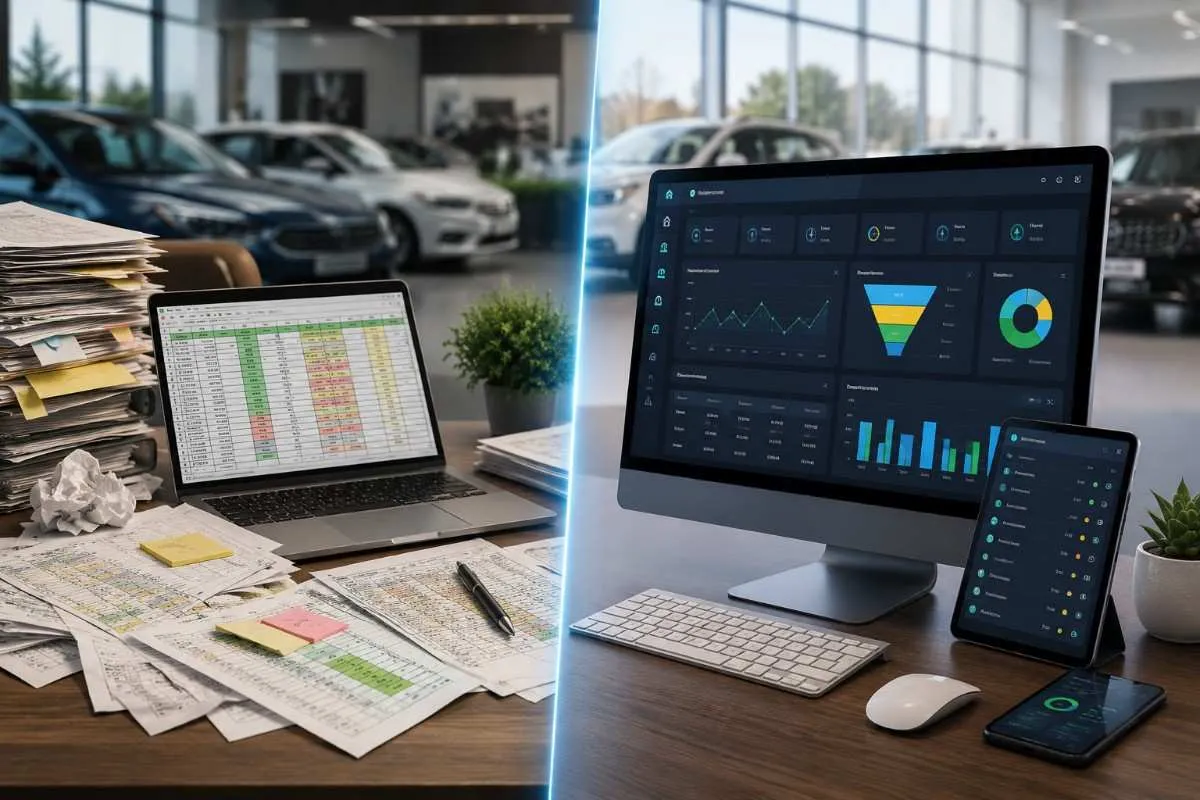
Excel vs Dealership Management Software: Which One Is Costing You Sales?
Every Indian automotive dealership starts with Excel. It is familiar, it is already installed, and it feels like the fastest way to get organised. You create one sheet for leads, another for test drives, and a third for vehicle stock. Your team knows how to use it, and for the first few months, it works fine. But there comes a point when the spreadsheet stops being a solution and starts becoming the problem. The signs are subtle at first: a lead goes cold because nobody followed up, a customer asks about a vehicle that was sold three days ago, or you spend two hours every Monday manually updating reports. What began as a quick fix has quietly turned into your biggest operational bottleneck. This comparison is not about whether Excel is a bad tool. It is about whether Excel is the right tool for running a growing dealership in India in 2026. Why Excel Feels Like the Right Choice at First Spreadsheets have genuine appeal for dealerships starting out or managing smaller operations. The reasons dealerships default to Excel are practical and valid. There is no training required. Everyone in your team already knows how to enter data and create basic formulas. There are no login credentials to manage, no user licenses to pay for, and no vendor contracts to review. Excel is flexible by design. You can add a column for “Finance Approved” or “Trade-in Value” in seconds. Need to track test drive feedback? Add another column. This freedom feels empowering when you are figuring out your workflow on the go. Sharing is simple. A single Excel file or a Google Sheet can be accessed by the entire team. It feels like collaboration, at least on the surface. And perhaps most importantly, Excel appears cost-effective. You already have Microsoft Office or Google Workspace. There is no additional software expense. For a dealership trying to conserve cash, this is a compelling argument . But this is where the trap lies. What seems like a cost-saving measure at the start often becomes a revenue-draining liability as your dealership grows. Book Your DealerSetu Demo Today The Hidden Costs of Managing a Dealership on Excel Excel is a spreadsheet. A dealership is a complex business with interconnected operations. The mismatch between the tool and the business creates costs that are not always visible on a balance sheet. Lost Leads and Missed Follow-ups A spreadsheet can store a date for the next follow-up, but it cannot remind your sales team when that date arrives. It cannot escalate a lead that has gone cold or track whether the promised call actually happened . For Indian dealerships, this is particularly damaging. Customers today are comparing prices and availability across multiple dealers. A delayed response or a missed follow-up often means losing a sale to a competitor who replied faster. Version Control Chaos One salesperson updates a row. Another sorts the sheet by a different column. A manager copies tabs to create a monthly report. Within a few days, you have three different versions of the same file, and nobody knows which one is accurate . When accountability breaks down, lead leakage increases and managers lose confidence in their own pipeline numbers. No Real-Time Visibility For dealerships with multiple outlets, the Excel problem multiplies. Each location maintains its own spreadsheet. Reports are shared via email or WhatsApp. By the time the data reaches the leadership team, it is already outdated . Decisions are made on stale information, and opportunities are missed. Inventory Inaccuracies Stock updates are manual. Vehicles are marked as sold hours or sometimes days after the transaction. A customer walks in asking for a specific model and colour. Your team checks the spreadsheet and says it is available. The vehicle has already been sold, but the sheet was not updated . The result is a broken promise and a customer who may not return. Manual Reporting Drains Manager Time Managers spend hours every week cleaning data to answer basic questions: which lead source converts best, which salesperson is performing, and how many deals are in negotiation . This is time that could be spent coaching the team, reviewing sales strategies, or handling customer escalations. Customer Experience Gaps Customer history is scattered across Excel sheets, WhatsApp chats, and sticky notes. Every time a customer calls, your team asks them to repeat information that was already provided. The experience feels disjointed, and the customer notices . Book Your DealerSetu Demo Today What Dealership Management Software Delivers A dedicated dealership management system is built for the specific needs of automotive retail. It addresses each of Excel’s weaknesses through design and automation. Centralised, Real-Time Data A DMS provides a single source of truth. Sales, service, inventory, and finance data live in one platform. Updates are reflected instantly. Whether you have one showroom or thirty, leadership gets a unified view of the entire operation . This is particularly valuable for dealership groups managing multiple locations. Instead of consolidating spreadsheets at month-end, you have live dashboards showing sales performance, inventory levels, and service utilisation across the network. Automated Lead Management and Follow-ups Leads are captured automatically from walk-ins, phone calls, and online portals. They are assigned to sales representatives based on rules. Follow-up reminders are generated automatically, and overdue tasks are escalated to managers . The impact is measurable. Ather Energy implemented a new DMS and reported a reduction in lead capture time to just 45 to 60 seconds. Lead conversion improved significantly with better tracking and follow-up discipline . Structured Pipeline Visibility Instead of manually tracking which leads are at which stage, a DMS provides a visual pipeline. You can see at a glance how many leads are newly acquired, how many have taken test drives, how many are in negotiation, and how many are close to closure. Forecasting becomes data-driven rather than guesswork . Inventory Sync Across Locations Vehicle stock is updated in real time. When a vehicle is sold, the inventory reflects it immediately. For multi-location operations, you can see stock availability across all outlets from

How Auto Dealers Lose Profit Through Discount Leakage
The math of selling cars in India has always been thin. Most passenger vehicle dealers operate on margins of 2.9% to 7.5% on vehicle cost, with the average hovering around 3.5% of the sale price. Spare parts offer better margins at 15–20%, but the core business runs on wafer‑thin numbers. When every percentage point matters, discount leakage is not a minor operational hiccup. It is a direct assault on survival. Discount leakage happens when your dealership gives away more margin than intended, authorised, or tracked. It shows up in multiple forms: unauthorised price cuts by sales executives, unapproved discounts in the service department, excessive freebies that eat into profitability, and inconsistent pricing across branches. Each instance seems small in isolation. A ₹200 discount here. A ₹500 free accessory there. A “special festive offer” that no one approved. Over a month, across hundreds of transactions, these small leaks drain lakhs of rupees from your bottom line. Indian dealerships are under unprecedented pressure. Inventory levels across several segments are hovering at 52–53 days, significantly above the healthy benchmark of 30–35 days. An estimated ₹52,000 crore worth of vehicles remain unsold. Dealers are forced to offer steep discounts to clear ageing stock. ICRA projects operating margins to moderate by 40–70 basis points in FY2025 owing to higher discounts. In this environment, every rupee of unmanaged discount is a rupee of profit you cannot afford to lose. The question is not whether discount leakage exists in your dealership. The question is whether you can see it. What Is Discount Leakage in an Automobile Dealership? Discount leakage is the gap between the profit you should make on a transaction and the profit you actually make. It is the margin that disappears because discounts are offered without proper authorisation, tracking, or reconciliation. This is different from strategic discounting. Strategic discounts are planned, budgeted, and approved. They serve a clear purpose: clearing specific inventory, matching competitor offers, or driving volume during festive seasons. Discount leakage is unplanned, unauthorised, and often invisible until the monthly P&L statement arrives. In Indian dealerships, discount leakage hides in plain sight. A sales executive offers an extra ₹5,000 discount to close a deal without seeking manager approval. A service advisor gives a “courtesy discount” on a paid service to keep a customer happy. A branch manager runs a local promotional offer that is not aligned with corporate pricing policy. None of these actions are malicious. They are often well‑intentioned efforts to satisfy customers or close sales. But without a system to track, approve, and audit every discount, these well‑intentioned actions collectively destroy profitability. The Many Faces of Discount Leakage in Indian Dealerships Discount leakage does not announce itself. It operates through multiple channels across your dealership. Understanding where it hides is the first step toward controlling it. Unauthorised Sales Discounts This is the most common form of discount leakage. Sales executives, under pressure to meet monthly targets, offer additional discounts beyond approved limits. The discount might be framed as a “special price” for a serious buyer or a “festive gesture.” Without real‑time visibility into approval workflows, these discounts go unnoticed until the deal is closed and the margin is already lost. The challenge is particularly acute during high‑volume periods like festive seasons, when dealers offer an additional 2–3% in discounts and incentives to move stock. Without strict approval controls, the line between planned discounting and margin erosion blurs quickly. Service Department Discount Leakage The service department is often treated as the dealership’s profit fortress. But discount leakage operates here too. Service advisors offer discounts on labour hours or parts to retain customers. Points redemption ledgers become tools for unauthorised adjustments. A ₹100–200 discount on a paid service might not seem significant, but over hundreds of service transactions, the cumulative impact is substantial. When discounts are offered without General Manager approval, the leakage becomes systemic. Inventory-Driven Forced Discounting This is the most painful form of discount leakage because it is driven by external pressure rather than internal laxity. When inventory piles up, carrying costs rise. Financing charges, insurance, and storage costs eat into already thin margins. Dealers panic and slash prices, often selling vehicles at or below invoice price, hoping to recover losses through manufacturer volume bonuses that may never materialise. Freebies and Accessories as Hidden Discounts Discounts are not always cash reductions. Free accessories, extended warranties, complimentary services, and other add‑ons are also discounts in disguise. When sales teams offer freebies without tracking their cost impact, these “customer goodwill” gestures become profit leaks. Inconsistent Pricing Across Branches For multi‑branch dealership groups, inconsistent pricing is a major source of leakage. Different showroom managers interpret discount policies differently. One branch offers deeper discounts to achieve its targets, creating pricing disparities that customers notice and exploit. Without centralised visibility and control, each branch operates as its own profit centre, and the group bears the cumulative cost. The True Cost of Discount Leakage Discount leakage is not just about individual transactions. Its real cost compounds across your entire operation. Margin erosion: When operating margins are already under pressure (ICRA expects them to moderate by 40–70 bps in FY2025), every additional percentage point of unauthorised discount directly hits net profit. Working capital strain: Dealerships already face working capital challenges. The industry is sitting on approximately ₹52,000 crore worth of unsold vehicles. When discounts erode margins, the ability to service inventory financing and maintain cash flow weakens further. Customer expectation reset: Once customers receive deep discounts, they expect them every time. This forces dealers into a cycle of continuous discounting, making it increasingly difficult to restore margins. Operational inefficiency: When discount approval processes are manual or non‑existent, management time is spent firefighting rather than strategising. Sales teams waste time negotiating discounts rather than selling value. Fraud vulnerability: Weak discount controls create opportunities for fraud. The Rajasthan vehicle scrappage scam, where a dealer allegedly pocketed ₹50,000 to ₹1 lakh per vehicle through fraudulent use of government discounts, is a stark reminder of what happens when discount processes lack transparency. Why Manual Processes Fail

Best Dealer Management Software in India: A 2026 Guide for Automotive Dealerships
A dealer management system is no longer a luxury—it is a business necessity. The Indian automotive retail landscape is in the middle of a fundamental shift. Dealerships that continue to rely on fragmented spreadsheets and legacy systems are losing ground to competitors who have embraced digitised operations. For automotive dealers across India, choosing the right DMS is one of the most critical decisions for sustainable growth. Let us examine what makes a great DMS and which platforms deserve serious consideration in 2026. Understanding Dealer Management Software and Its Importance in India Dealer management software is a centralised platform that connects and automates core dealership functions. It brings together vehicle sales, service operations, spare parts inventory, customer relationship management, accounting, and reporting into one unified system. For Indian dealerships, the value extends beyond basic operational efficiency. A well-implemented DMS helps you navigate the complexities of India’s business environment—GST compliance, multi-location operations, regional customer preferences, and manufacturer reporting requirements. The dealer management system market in India is experiencing strong growth. Rising digital adoption, increasing vehicle sales, and a shift from traditional paperwork to automation are driving this expansion. Cloud-based platforms are gaining particular traction, delivering flexibility, scalability, and remote accessibility that benefit small and mid-size dealerships in Tier 2 and Tier 3 cities. Key Features to Look for in Dealer Management Software Before evaluating specific vendors, it is essential to understand what a modern DMS should offer. Your platform must address the complete dealership lifecycle. Sales Management and Lead Tracking The system should capture every enquiry—whether from your showroom, phone calls, website, or third-party portals. It should automatically assign leads to sales representatives, track follow-up activities, and provide visibility into your sales pipeline. Real-time reporting on conversion rates and sales performance helps you identify bottlenecks and coaching opportunities. Service Operations Management This is often the most heavily used module in a dealership. Key capabilities include service appointment booking, digital vehicle check-in, job card creation, skill-based technician assignment, live job tracking, and digital estimate approvals. A paperless service workflow improves efficiency, reduces errors, and enhances customer satisfaction through faster turnaround times. Spare Parts and Inventory Control Efficient inventory management is critical for profitability. Your DMS should handle parts procurement, stock tracking, supplier management, and automated reordering. Barcode support for physical inventory management helps reduce losses from shrinkage or expiry. CRM and Customer Engagement A built-in customer relationship management module should maintain a 360-degree view of each customer—including vehicle history, service records, preferences, and communication history. Automated service reminders, birthday greetings, and targeted promotional offers help build long-term relationships and drive repeat business. Features like WhatsApp and SMS integration are increasingly important for Indian customers who prefer communication on mobile platforms. Accounting, GST Compliance, and Finance The system must handle invoicing, purchase orders, expense tracking, and taxation. GST readiness is non-negotiable. Integration with financing and insurance processes streamlines vehicle purchase and loan processing for your customers. Reporting and Analytics Access to real-time dashboards and detailed reports is essential for data-driven decision-making. Look for platforms that offer customisable reports across sales, service, parts, finance, and overall business performance. Mobile Accessibility With smartphones becoming ubiquitous in India, your sales and service teams need access to critical information on the go. Mobile-first DMS interfaces allow staff to manage bookings, update job status, and communicate with customers from anywhere. Some platforms offer dedicated mobile apps for dealer personnel. Regional Language Support To drive adoption across diverse geographies, particularly in non-English speaking regions, some DMS providers offer multilingual interfaces. This is a significant advantage for dealerships in Tier 2 and Tier 3 cities, reducing training time and improving user engagement. Evaluating the Best Dealer Management Software Options in India India’s DMS market includes global platforms, OEM-aligned systems, and India-focused vendors built around local dealership needs. The best choice depends on your dealership size, brand requirements, integration needs, and budget. Indian-Made Innovation Recent developments highlight the strength of homegrown solutions. Mercedes-Benz India launched SKYLine, a bespoke DMS developed entirely in India over two years in partnership with Zoho. SKYLine digitises the entire service lifecycle across the company’s nationwide dealership network . SKYLine operates on a decentralised architecture where each Mercedes-Benz dealership runs its own dedicated Zoho CRM instance, providing dealership autonomy while maintaining compliance with centrally defined standards. The system integrates seamlessly with Mercedes-Benz’s global systems. The rollout involved over 5,000 man-days of user acceptance testing and 3,000 man-days of training, ensuring smooth adoption. This partnership reflects the growing sophistication of Indian technology providers in creating enterprise-grade solutions for complex dealership operations. Enterprise-Grade Global Platforms For larger dealer groups with multi-location operations and complex reporting requirements, established global platforms remain strong contenders. CDK Global is widely used by large automotive dealer networks and OEM-aligned networks. Its strengths include structured sales and service workflows, warranty management, and enterprise reporting. Implementation costs and localisation requirements should be carefully assessed for Indian operations. SAP Automotive Dealer Management is preferred by dealer groups requiring deep integration with finance, procurement, and enterprise business intelligence systems. It is best suited where the dealership is part of a larger group with complex compliance expectations. Implementation cost and user adoption are the main considerations. Tekion offers a modern, cloud-native automotive retail platform focused on digital workflows and real-time data. It connects online enquiries, showroom processes, service appointments, and reporting in one environment. Indian dealers should evaluate OEM availability and local accounting integration before selecting. India-Focused Solutions A range of vendors has built solutions specifically for Indian dealership requirements. Autosoft DMS is a commonly evaluated option for automotive retail businesses needing an integrated platform covering vehicle sales, service, spares, accounts, CRM, and reporting. It is suited to growing dealer groups seeking stronger control over enquiries, bookings, and repair orders. Zoho-based DMS solutions are attractive for small and mid-sized dealers due to their flexibility and lower cost. Businesses can begin with lead management, billing, and stock tracking, then add features like dashboards, WhatsApp integration, and finance modules later. The support quality depends heavily on the implementation partner. Marg ERP is widely recognised in India for inventory,