
Every automotive dealership runs on information. Vehicle availability, customer history, service schedules, parts inventory, and financial records are the lifeblood of your business. But when this information lives in scattered spreadsheets, disconnected software, or paper files, your dealership slows down. Mistakes creep in. Customers get frustrated.
An Automotive Dealer Management System, or DMS, solves this problem. It is the central platform that brings every department of a dealership together. Sales, service, parts, finance, and accounting all operate from a single source of truth.
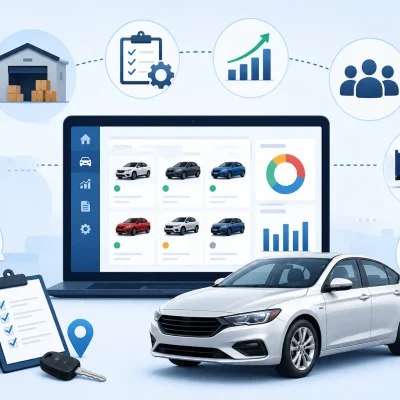
Think of a DMS as the operating system for your dealership. It is not just one piece of software. It is an integrated suite of tools designed specifically for the unique workflows of automotive retail. When your people, processes, and data work in sync, your dealership runs faster, smarter, and more profitably.
This guide breaks down everything you need to know about automotive DMS software: what it does, why it matters, and how it can transform your dealership.
What Exactly Is a Dealer Management System?
A DMS is specialised software built to manage the daily operations of an automotive dealership. It connects your front-office customer-facing activities with your back-office accounting and compliance functions.
The core job of a DMS is to create a single source of truth for all your dealership data. Instead of maintaining separate systems for sales, service, inventory, and accounting, a DMS integrates everything into one platform. This integration eliminates data silos, reduces manual data entry, and ensures that every department works with the same up-to-date information.
For a dealership in India, the DMS handles processes specific to the local market. This includes GST-compliant invoicing, integration with OEM reporting systems, and communication channels like WhatsApp that Indian customers prefer.
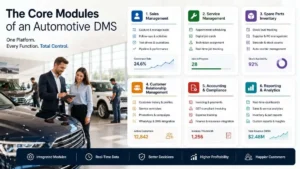
The Core Modules of an Automotive DMS
A comprehensive DMS is not a single tool. It is a collection of integrated modules, each designed for a specific function within the dealership.
Sales Management
The sales module captures leads from every channel: showroom visits, phone calls, website enquiries, and third-party portals. It assigns leads to sales representatives, tracks follow-up activities, and manages the entire sales process from enquiry to delivery.
Test drive scheduling, quotation generation, and finance application tracking are all handled within this module. Managers get real-time visibility into the sales pipeline, conversion rates, and individual salesperson performance.
Service Management
Service operations are often the largest revenue generator after vehicle sales. A service module manages appointment booking, digital vehicle check-in, job card creation, and technician assignment.
The system tracks each job in real time, allowing service advisors to provide accurate updates to waiting customers. Digital estimates can be shared with customers for approval before work begins, reducing disputes and improving trust.
Spare Parts Inventory
Inventory management is critical for profitability in the parts department. The DMS tracks stock levels, manages supplier orders, and handles procurement.
Barcode scanning reduces errors in physical inventory counts. Automated reorder points ensure popular parts are always in stock while preventing overstocking of slow-moving items. The system also tracks parts usage patterns to inform purchasing decisions.
Customer Relationship Management
The CRM module maintains a complete history of every customer: vehicles owned, service records, communication preferences, and past interactions.
Automated service reminders, birthday greetings, and promotional offers help dealerships stay connected with customers. For Indian dealerships, integration with WhatsApp and SMS is particularly important for reaching customers on their preferred channels.
Accounting and Compliance
The accounting module handles invoicing, purchase orders, expense tracking, and tax calculations. GST compliance is built into the system, ensuring that invoices meet government requirements.
The module also integrates with financing and insurance processes, streamlining vehicle purchase and loan processing for customers.
Reporting and Analytics
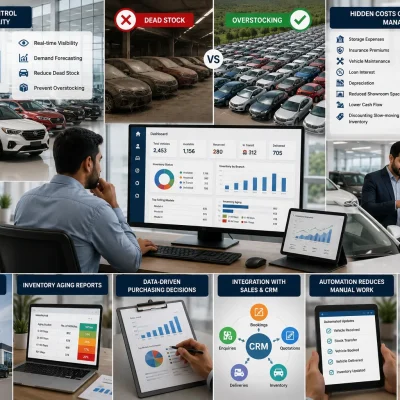
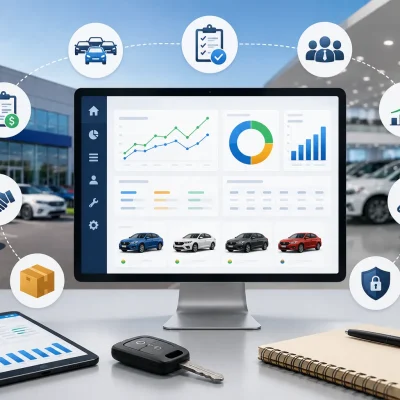
Real-time dashboards provide visibility into every aspect of the dealership. Sales performance, service revenue, inventory turnover, and lead conversion rates are available on demand.
Customisable reports help dealership leaders make data-driven decisions without waiting for manual spreadsheet consolidation.
Losing leads due to manual follow-ups? See how DealerSetu automates sales tracking and improves conversion rates.
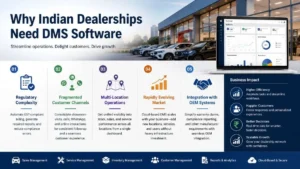
Why Indian Dealerships Need DMS Software
The Indian automotive retail landscape has unique characteristics that make DMS adoption particularly valuable.
Regulatory Complexity
India’s tax system requires precise invoicing and reporting. A DMS automates GST-compliant billing, generates required reports, and reduces the risk of costly compliance errors.
Fragmented Customer Channels
Indian customers interact with dealerships through multiple channels: showroom visits, phone calls, WhatsApp, and online platforms. A DMS consolidates all these interactions, ensuring consistent follow-up and a seamless customer experience.
Multi-Location Operations
Many Indian dealership groups operate across multiple cities. A DMS provides unified visibility into stock, sales, and service performance across all locations from a single dashboard.
Rapidly Evolving Market
India’s automotive market is one of the fastest growing globally. Dealerships need systems that can scale with their business. Cloud-based DMS platforms offer the flexibility to add new locations, vehicles, and users without significant infrastructure investment.
Integration with OEM Systems
Authorised dealerships must report to their manufacturers. A DMS with OEM integration capabilities simplifies warranty claims, compliance reporting, and other manufacturer requirements.
Is your dealership ready to scale? DealerSetu is built for Indian dealerships at every growth stage. Talk to our experts today.
The Business Case for DMS: From Cost to Investment
Dealership owners often view DMS as an expense. This perspective misses the value that a well-implemented system delivers.
Improved Lead Conversion: Automated follow-ups ensure no lead falls through the cracks. Faster response times directly impact conversion rates in a competitive market.
Higher Service Revenue: Streamlined service operations increase workshop throughput and customer satisfaction, leading to repeat business.
Reduced Inventory Costs: Better parts and vehicle inventory management reduces holding costs and write-offs.
Better Manager Productivity: Automated reporting frees managers from manual data consolidation, allowing them to focus on coaching and strategy.
Stronger Customer Retention: Consistent, personalized communication builds loyalty and drives repeat visits.
Cloud-Based vs On-Premise DMS: Which Is Right for You?
| Feature | Cloud-Based DMS | On-Premise DMS |
|---|---|---|
| Upfront Cost | Low (subscription based) | High (hardware + licenses) |
| IT Infrastructure | Minimal (vendor manages) | Significant (in-house servers) |
| Remote Access | Yes, from anywhere | Limited to dealership network |
| Scalability | Easy (add users/locations) | Complex (new hardware required) |
| Maintenance | Vendor handles updates | Dealership responsible |
| Data Control | Vendor servers | Full control |
| Best For | Small to mid-size dealerships, multi-location groups | Large enterprises with IT teams |
The global DMS market is expected to reach an estimated $16.5 billion by 2031 with a CAGR of 10.7%. In India, cloud adoption is driving significant growth as dealerships in Tier 2 and Tier 3 cities embrace scalable solutions.
Looking for a cloud-based DMS that grows with your business? DealerSetu offers affordable cloud solutions for Indian dealerships. Explore our plans.
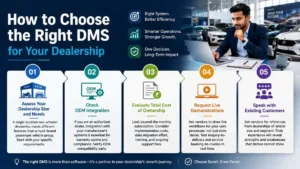
How to Choose the Right DMS for Your Dealership
Assess Your Dealership Size and Needs
A single-location two-wheeler dealership needs different features than a multi-brand passenger vehicle group. Start with your specific requirements.
Check OEM Integration
If you are an authorised dealer, integration with your manufacturer’s systems is essential for warranty claims and compliance. Verify OEM compatibility early.
Evaluate Total Cost of Ownership
Look beyond the monthly subscription. Consider implementation costs, data migration effort, training, and ongoing support fees.
Request Live Demonstrations
Ask vendors to show live workflows for your core processes, not just slide decks. Test enquiry-to-delivery and service booking-to-invoice in real time.
Speak with Existing Customers
Ask vendors for references from dealerships of similar size and segment. Their experience will reveal strengths and weaknesses that demos cannot show.
Ready to compare DMS options? DealerSetu offers a free consultation to help you find the right fit for your dealership.
Frequently Asked Questions
What does DMS stand for in automotive?
DMS stands for Dealer Management System. It is the software platform that manages a dealership’s operations, including sales, service, inventory, and accounting.
Is DMS software suitable for small dealerships?
Yes. Many DMS providers offer modular solutions that scale with your business. Small dealerships can start with essential features and add modules as they grow. Solutions like DealerSetu are designed to be affordable and accessible for dealerships of all sizes.
Can a DMS integrate with existing accounting software?
Most modern DMS platforms offer integration capabilities with popular accounting software. Some platforms have accounting modules built in, while others offer API-based integration.
How long does it take to implement a DMS?
Implementation timelines vary. Small dealerships with standard requirements can go live in a few weeks. Larger groups with complex integrations may take several months.
What is the cost of DMS software in India?
Costs vary widely based on dealership size, features, and deployment model. Cloud-based solutions are typically more affordable upfront than on-premise systems.
How does a DMS improve customer experience?
A DMS provides a complete view of each customer’s history, enabling personalized service. Automated reminders, faster response times, and consistent communication build trust and loyalty.
Still have questions about DMS software? DealerSetu’s experts are here to help. Book a free consultation today.
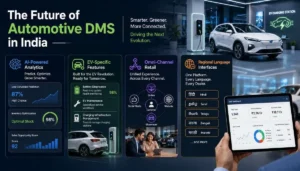
The Future of Automotive DMS in India
The DMS landscape continues to evolve. Several trends will shape the market in the coming years.
AI-Powered Analytics
Modern DMS platforms are integrating artificial intelligence to predict customer behavior, optimize inventory, and identify sales opportunities.
EV-Specific Features
India’s EV market is growing rapidly. DMS platforms are adding modules for battery diagnostics, EV maintenance, and charging infrastructure management.
Omni-Channel Retail
Customers expect to interact seamlessly across online and offline channels. DMS platforms are integrating with online sales portals and digital marketing tools.
Regional Language Interfaces
To drive adoption among non-English speaking dealers, platforms now provide multilingual interfaces, reducing training time and increasing engagement in rural markets.
Conclusion
A Dealer Management System is not just software. It is the operational backbone of a modern automotive dealership. By centralising data, automating workflows, and providing real-time visibility, a DMS transforms how dealerships operate.
For Indian dealerships, the benefits are particularly compelling. GST compliance, multi-location operations, and diverse customer channels make a DMS an essential tool for growth and profitability.
The question is no longer whether to adopt a DMS. It is which DMS is right for your dealership. Evaluate your needs, compare options, and choose a platform that can grow with your business.
DealerSetu offers a modern, affordable, and India-specific DMS solution designed for dealerships ready to move beyond spreadsheets and disconnected systems. The right DMS is an investment in your dealership’s future.
Transform your dealership operations today. Explore how DealerSetu can help you sell more, service better, and grow faster. Start your free consultation now.