

Every automotive dealership runs on information. Vehicle availability, customer history, service schedules, parts inventory, and financial records are the lifeblood of your business. But when this information lives in scattered spreadsheets, disconnected software, or paper files, your dealership slows down. Mistakes creep in. Customers get frustrated. An Automotive Dealer Management System, or DMS, solves this problem. It is the central platform that brings every department of a dealership together. Sales, service, parts, finance, and accounting all operate from a single source of truth. Think of a DMS as the operating system for your dealership. It is not just one piece of software. It is an integrated suite of tools designed specifically for the unique workflows of automotive retail. When your people, processes, and data work in sync, your dealership runs faster, smarter, and more profitably. This guide breaks down everything you need to know about automotive DMS software: what it does, why it matters, and how it can transform your dealership. What Exactly Is a Dealer Management System? A DMS is specialised software built to manage the daily operations of an automotive dealership. It connects your front-office customer-facing activities with your back-office accounting and compliance functions. The core job of a DMS is to create a single source of truth for all your dealership data. Instead of maintaining separate systems for sales, service, inventory, and accounting, a DMS integrates everything into one platform. This integration eliminates data silos, reduces manual data entry, and ensures that every department works with the same up-to-date information. For a dealership in India, the DMS handles processes specific to the local market. This includes GST-compliant invoicing, integration with OEM reporting systems, and communication channels like WhatsApp that Indian customers prefer. The Core Modules of an Automotive DMS A comprehensive DMS is not a single tool. It is a collection of integrated modules, each designed for a specific function within the dealership. Sales Management The sales module captures leads from every channel: showroom visits, phone calls, website enquiries, and third-party portals. It assigns leads to sales representatives, tracks follow-up activities, and manages the entire sales process from enquiry to delivery. Test drive scheduling, quotation generation, and finance application tracking are all handled within this module. Managers get real-time visibility into the sales pipeline, conversion rates, and individual salesperson performance. Service Management Service operations are often the largest revenue generator after vehicle sales. A service module manages appointment booking, digital vehicle check-in, job card creation, and technician assignment. The system tracks each job in real time, allowing service advisors to provide accurate updates to waiting customers. Digital estimates can be shared with customers for approval before work begins, reducing disputes and improving trust. Spare Parts Inventory Inventory management is critical for profitability in the parts department. The DMS tracks stock levels, manages supplier orders, and handles procurement. Barcode scanning reduces errors in physical inventory counts. Automated reorder points ensure popular parts are always in stock while preventing overstocking of slow-moving items. The system also tracks parts usage patterns to inform purchasing decisions. Customer Relationship Management The CRM module maintains a complete history of every customer: vehicles owned, service records, communication preferences, and past interactions. Automated service reminders, birthday greetings, and promotional offers help dealerships stay connected with customers. For Indian dealerships, integration with WhatsApp and SMS is particularly important for reaching customers on their preferred channels. Accounting and Compliance The accounting module handles invoicing, purchase orders, expense tracking, and tax calculations. GST compliance is built into the system, ensuring that invoices meet government requirements. The module also integrates with financing and insurance processes, streamlining vehicle purchase and loan processing for customers. Reporting and Analytics Real-time dashboards provide visibility into every aspect of the dealership. Sales performance, service revenue, inventory turnover, and lead conversion rates are available on demand. Customisable reports help dealership leaders make data-driven decisions without waiting for manual spreadsheet consolidation. Losing leads due to manual follow-ups? See how DealerSetu automates sales tracking and improves conversion rates. Book Your DealerSetu Demo Today Why Indian Dealerships Need DMS Software The Indian automotive retail landscape has unique characteristics that make DMS adoption particularly valuable. Regulatory Complexity India’s tax system requires precise invoicing and reporting. A DMS automates GST-compliant billing, generates required reports, and reduces the risk of costly compliance errors. Fragmented Customer Channels Indian customers interact with dealerships through multiple channels: showroom visits, phone calls, WhatsApp, and online platforms. A DMS consolidates all these interactions, ensuring consistent follow-up and a seamless customer experience. Multi-Location Operations Many Indian dealership groups operate across multiple cities. A DMS provides unified visibility into stock, sales, and service performance across all locations from a single dashboard. Rapidly Evolving Market India’s automotive market is one of the fastest growing globally. Dealerships need systems that can scale with their business. Cloud-based DMS platforms offer the flexibility to add new locations, vehicles, and users without significant infrastructure investment. Integration with OEM Systems Authorised dealerships must report to their manufacturers. A DMS with OEM integration capabilities simplifies warranty claims, compliance reporting, and other manufacturer requirements. Is your dealership ready to scale? DealerSetu is built for Indian dealerships at every growth stage. Talk to our experts today. Book Your DealerSetu Demo Today The Business Case for DMS: From Cost to Investment Dealership owners often view DMS as an expense. This perspective misses the value that a well-implemented system delivers. Improved Lead Conversion: Automated follow-ups ensure no lead falls through the cracks. Faster response times directly impact conversion rates in a competitive market. Higher Service Revenue: Streamlined service operations increase workshop throughput and customer satisfaction, leading to repeat business. Reduced Inventory Costs: Better parts and vehicle inventory management reduces holding costs and write-offs. Better Manager Productivity: Automated reporting frees managers from manual data consolidation, allowing them to focus on coaching and strategy. Stronger Customer Retention: Consistent, personalized communication builds loyalty and drives repeat visits. Cloud-Based vs On-Premise DMS: Which Is Right for You? Feature Cloud-Based DMS On-Premise DMS Upfront Cost Low (subscription based) High (hardware + licenses) IT Infrastructure Minimal (vendor
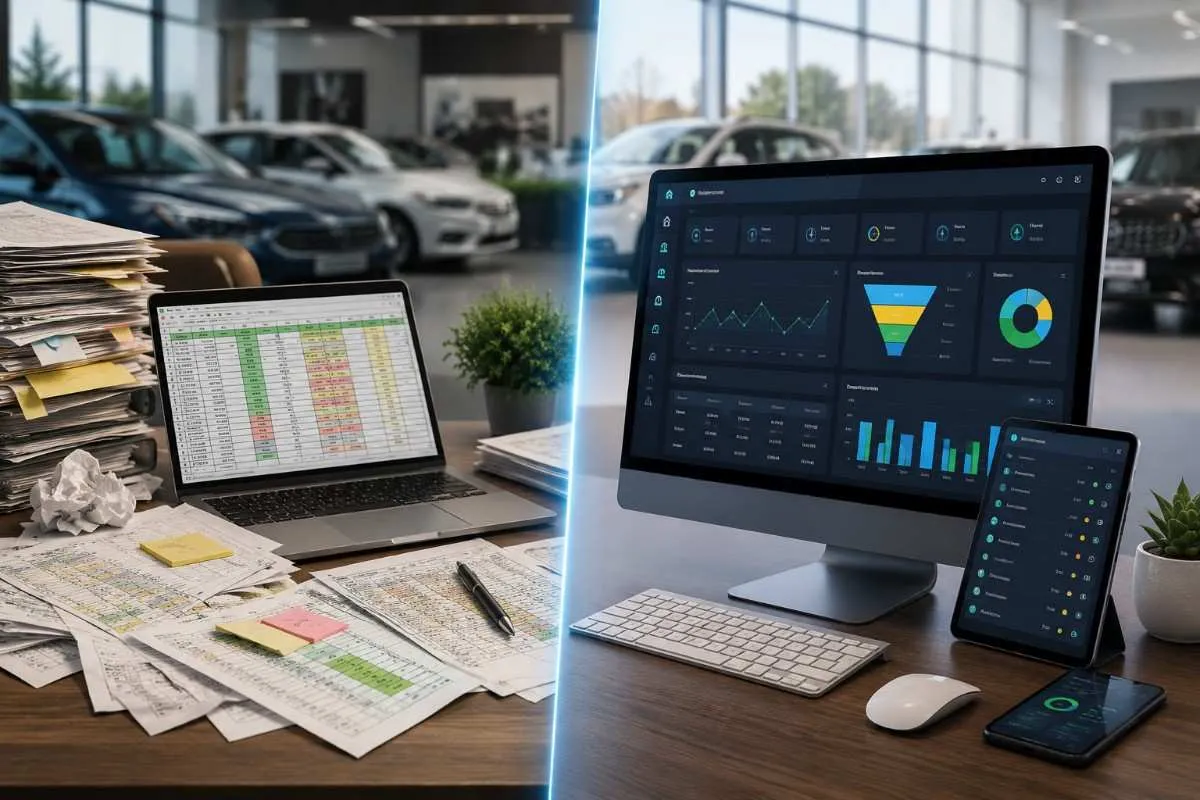
Excel vs Dealership Management Software: Which One Is Costing You Sales?
Every Indian automotive dealership starts with Excel. It is familiar, it is already installed, and it feels like the fastest way to get organised. You create one sheet for leads, another for test drives, and a third for vehicle stock. Your team knows how to use it, and for the first few months, it works fine. But there comes a point when the spreadsheet stops being a solution and starts becoming the problem. The signs are subtle at first: a lead goes cold because nobody followed up, a customer asks about a vehicle that was sold three days ago, or you spend two hours every Monday manually updating reports. What began as a quick fix has quietly turned into your biggest operational bottleneck. This comparison is not about whether Excel is a bad tool. It is about whether Excel is the right tool for running a growing dealership in India in 2026. Why Excel Feels Like the Right Choice at First Spreadsheets have genuine appeal for dealerships starting out or managing smaller operations. The reasons dealerships default to Excel are practical and valid. There is no training required. Everyone in your team already knows how to enter data and create basic formulas. There are no login credentials to manage, no user licenses to pay for, and no vendor contracts to review. Excel is flexible by design. You can add a column for “Finance Approved” or “Trade-in Value” in seconds. Need to track test drive feedback? Add another column. This freedom feels empowering when you are figuring out your workflow on the go. Sharing is simple. A single Excel file or a Google Sheet can be accessed by the entire team. It feels like collaboration, at least on the surface. And perhaps most importantly, Excel appears cost-effective. You already have Microsoft Office or Google Workspace. There is no additional software expense. For a dealership trying to conserve cash, this is a compelling argument . But this is where the trap lies. What seems like a cost-saving measure at the start often becomes a revenue-draining liability as your dealership grows. Book Your DealerSetu Demo Today The Hidden Costs of Managing a Dealership on Excel Excel is a spreadsheet. A dealership is a complex business with interconnected operations. The mismatch between the tool and the business creates costs that are not always visible on a balance sheet. Lost Leads and Missed Follow-ups A spreadsheet can store a date for the next follow-up, but it cannot remind your sales team when that date arrives. It cannot escalate a lead that has gone cold or track whether the promised call actually happened . For Indian dealerships, this is particularly damaging. Customers today are comparing prices and availability across multiple dealers. A delayed response or a missed follow-up often means losing a sale to a competitor who replied faster. Version Control Chaos One salesperson updates a row. Another sorts the sheet by a different column. A manager copies tabs to create a monthly report. Within a few days, you have three different versions of the same file, and nobody knows which one is accurate . When accountability breaks down, lead leakage increases and managers lose confidence in their own pipeline numbers. No Real-Time Visibility For dealerships with multiple outlets, the Excel problem multiplies. Each location maintains its own spreadsheet. Reports are shared via email or WhatsApp. By the time the data reaches the leadership team, it is already outdated . Decisions are made on stale information, and opportunities are missed. Inventory Inaccuracies Stock updates are manual. Vehicles are marked as sold hours or sometimes days after the transaction. A customer walks in asking for a specific model and colour. Your team checks the spreadsheet and says it is available. The vehicle has already been sold, but the sheet was not updated . The result is a broken promise and a customer who may not return. Manual Reporting Drains Manager Time Managers spend hours every week cleaning data to answer basic questions: which lead source converts best, which salesperson is performing, and how many deals are in negotiation . This is time that could be spent coaching the team, reviewing sales strategies, or handling customer escalations. Customer Experience Gaps Customer history is scattered across Excel sheets, WhatsApp chats, and sticky notes. Every time a customer calls, your team asks them to repeat information that was already provided. The experience feels disjointed, and the customer notices . Book Your DealerSetu Demo Today What Dealership Management Software Delivers A dedicated dealership management system is built for the specific needs of automotive retail. It addresses each of Excel’s weaknesses through design and automation. Centralised, Real-Time Data A DMS provides a single source of truth. Sales, service, inventory, and finance data live in one platform. Updates are reflected instantly. Whether you have one showroom or thirty, leadership gets a unified view of the entire operation . This is particularly valuable for dealership groups managing multiple locations. Instead of consolidating spreadsheets at month-end, you have live dashboards showing sales performance, inventory levels, and service utilisation across the network. Automated Lead Management and Follow-ups Leads are captured automatically from walk-ins, phone calls, and online portals. They are assigned to sales representatives based on rules. Follow-up reminders are generated automatically, and overdue tasks are escalated to managers . The impact is measurable. Ather Energy implemented a new DMS and reported a reduction in lead capture time to just 45 to 60 seconds. Lead conversion improved significantly with better tracking and follow-up discipline . Structured Pipeline Visibility Instead of manually tracking which leads are at which stage, a DMS provides a visual pipeline. You can see at a glance how many leads are newly acquired, how many have taken test drives, how many are in negotiation, and how many are close to closure. Forecasting becomes data-driven rather than guesswork . Inventory Sync Across Locations Vehicle stock is updated in real time. When a vehicle is sold, the inventory reflects it immediately. For multi-location operations, you can see stock availability across all outlets from