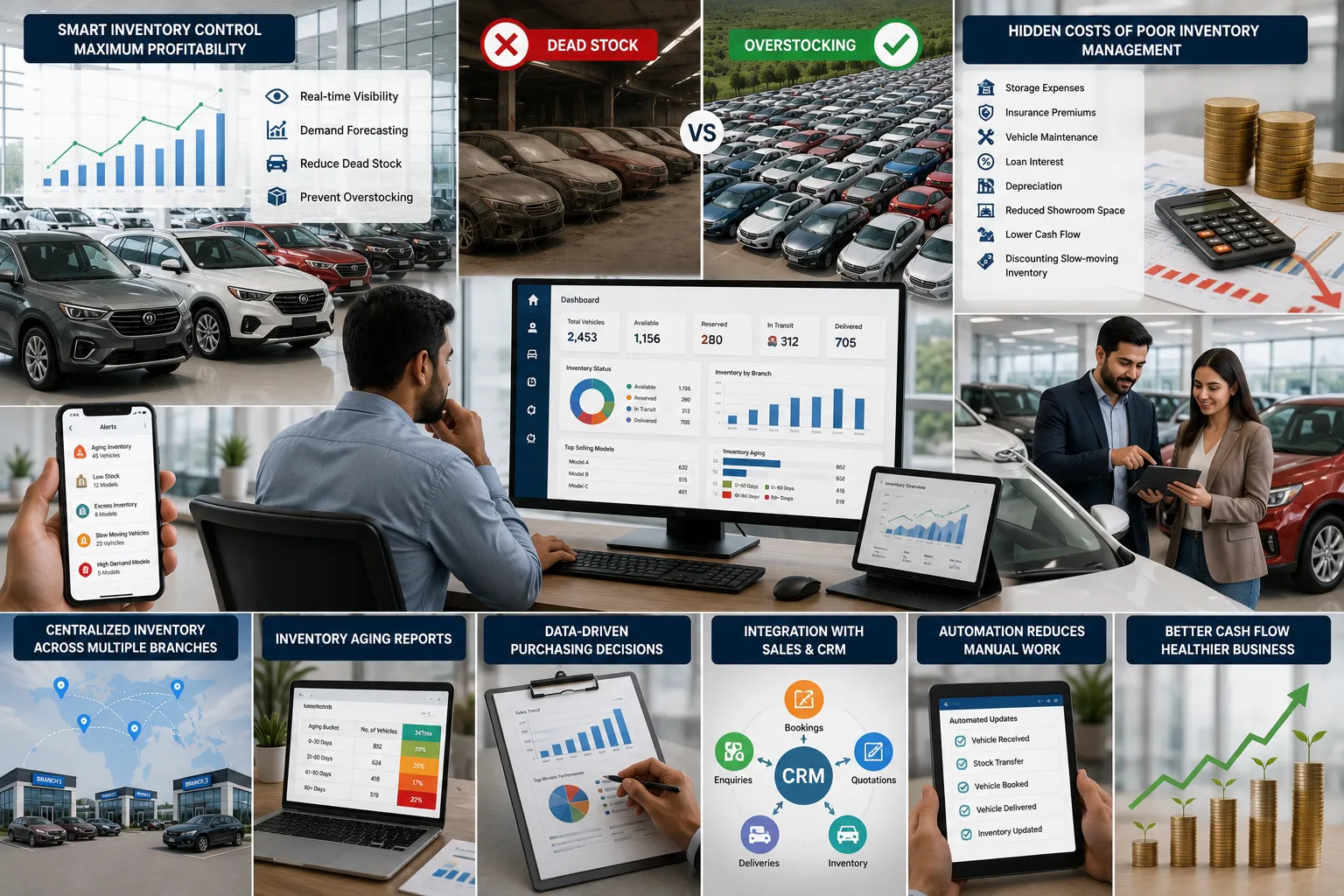
For every automobile dealership, inventory is one of the largest business investments. Every vehicle sitting in the showroom or stockyard represents capital that should generate revenue as quickly as possible. However, many dealerships struggle with two common inventory challenges: dead stock and overstocking.
Dead stock refers to vehicles that remain unsold for long periods, while overstocking occurs when dealerships purchase more inventory than market demand requires. Both problems tie up cash flow, increase storage costs, and reduce overall profitability.
These issues often arise because dealerships rely on manual inventory tracking, outdated spreadsheets, or disconnected systems that provide limited visibility into stock movement and customer demand.
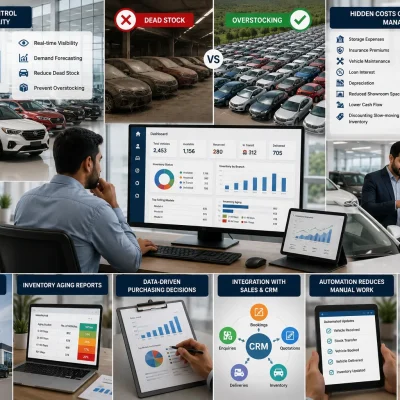
Fortunately, modern vehicle inventory management software helps dealerships overcome these challenges by providing real-time inventory visibility, demand forecasting, automated stock monitoring, and intelligent reporting. Instead of making purchasing decisions based on assumptions, dealerships can rely on accurate data to maintain the right inventory levels.
Let’s understand how the right inventory management solution can significantly reduce dead stock and prevent overstocking.
Understanding Dead Stock in Automobile Dealerships
Dead stock refers to vehicles that remain unsold for an extended period. These vehicles occupy valuable showroom space while continuously increasing operational costs.
Several factors contribute to dead stock, including inaccurate demand forecasting, changing customer preferences, seasonal fluctuations, and poor inventory planning.
Every additional day a vehicle remains unsold increases expenses related to insurance, maintenance, financing, depreciation, and storage. Over time, dealerships may need to offer heavy discounts to clear aging inventory, directly impacting profit margins.
Without proper inventory monitoring, identifying slow-moving vehicles becomes difficult until financial losses have already occurred.
What Causes Overstocking?
Overstocking happens when dealerships purchase more vehicles than customers are likely to buy within a reasonable period.
Many dealerships order inventory based on assumptions instead of actual sales trends. Some also purchase excess stock during promotional offers or to prepare for anticipated demand that never materializes.
Common reasons for overstocking include:
- Lack of sales forecasting
- Poor inventory visibility
- Duplicate vehicle purchases
- Inefficient stock transfers
- Limited reporting
- Seasonal demand miscalculations
Overstocking not only increases carrying costs but also limits the dealership’s ability to invest in faster-moving vehicle models.
The Hidden Cost of Poor Inventory Management
Many dealership owners only consider the purchase price of a vehicle when calculating inventory costs. In reality, every unsold vehicle continues to generate additional expenses.
These costs include:
- Storage expenses
- Insurance premiums
- Vehicle maintenance
- Loan interest
- Depreciation
- Reduced showroom space
- Lower cash flow
- Discounting slow-moving inventory
Without an effective dealer inventory management system, these hidden costs continue to grow while reducing overall profitability.
Real-Time Inventory Visibility Improves Decision Making
One of the biggest advantages of vehicle inventory management software is complete visibility into inventory.
Instead of manually checking spreadsheets or contacting multiple branches, dealership managers can instantly see:
- Available vehicles
- Reserved vehicles
- Delivered vehicles
- In-transit inventory
- Aging inventory
- Branch-wise stock
Real-time visibility enables dealerships to make informed purchasing decisions and avoid ordering vehicles that are already available within the organization.
Better Demand Forecasting
One of the primary reasons dealerships accumulate dead stock is inaccurate forecasting.
Modern automobile inventory management software analyzes historical sales data, seasonal buying patterns, regional demand, and inventory turnover rates to predict future inventory requirements.
For example, if SUVs consistently sell faster during festive seasons while premium sedans move more slowly, dealership managers can adjust purchasing strategies accordingly.
Instead of relying on guesswork, dealerships use actual business data to optimize inventory levels.
Faster Inventory Turnover
Inventory turnover is one of the most important performance indicators for any dealership.
Higher turnover means vehicles are sold quickly, reducing financing costs and improving cash flow.
A modern vehicle inventory tracking software highlights slow-moving inventory before it becomes dead stock. Managers can launch promotional campaigns, transfer vehicles between branches, or adjust pricing strategies to improve sales.
Faster inventory turnover directly contributes to healthier business performance.
Centralized Inventory Across Multiple Branches
Many dealership groups operate multiple showrooms across different cities.
Without centralized inventory management, one branch may overstock a particular model while another branch struggles to meet customer demand.
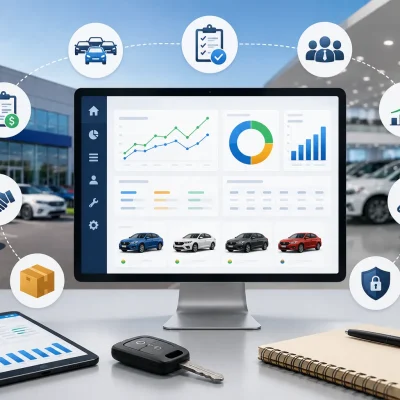
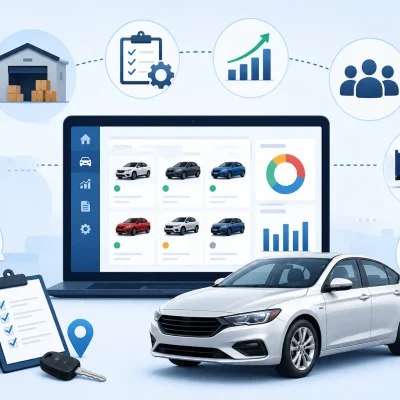
A cloud-based dealership inventory management software allows managers to monitor inventory across every branch from a single dashboard.
Instead of purchasing additional vehicles unnecessarily, dealerships can simply transfer inventory between locations, reducing overstocking while improving vehicle availability.
Automated Stock Alerts
Manual inventory monitoring often causes managers to react too late.
Modern vehicle stock management software automatically sends alerts for:
- Aging inventory
- Low stock
- Excess inventory
- Slow-moving vehicles
- High-demand models
These notifications help dealerships take timely action before inventory problems become costly.
Inventory Aging Reports Help Reduce Dead Stock
One of the most valuable features of vehicle inventory management software is inventory aging analysis. Every vehicle in stock is categorized based on how long it has remained in the dealership.
Managers can quickly identify vehicles that have been in inventory for 30, 60, 90, or even 180 days. Instead of waiting until these vehicles become difficult to sell, dealerships can take proactive measures such as running promotional offers, adjusting prices, increasing marketing efforts, or transferring inventory to another branch where demand is higher.
Regular inventory aging reports help dealerships maintain healthier stock levels while reducing unnecessary carrying costs.
Data-Driven Purchasing Decisions
Successful dealerships rely on data rather than assumptions.
A modern automotive inventory management solution provides detailed reports that help managers understand:
- Best-selling vehicle models
- Slow-moving inventory
- Seasonal buying trends
- Branch-wise sales performance
- Vehicle turnover rates
- Purchase history
These insights help dealerships order the right vehicles in the right quantities. Instead of overstocking popular assumptions, purchasing teams can align inventory with actual customer demand.
Integration with Sales and CRM
Inventory management becomes even more effective when connected with sales and customer relationship management.
Modern inventory management for car dealerships integrates inventory with CRM, enquiries, bookings, quotations, and vehicle deliveries. When a vehicle is booked or sold, inventory updates automatically without requiring manual intervention.
Sales teams can instantly check vehicle availability while speaking with customers, reducing booking errors and improving response times.
This integration also allows managers to understand which enquiries are converting into sales and which vehicle models are generating the highest demand.
Reduce Manual Work and Human Errors
Manual inventory management often leads to duplicate records, incorrect stock counts, delayed updates, and misplaced vehicle information.
By automating routine processes, inventory software for automobile dealers reduces administrative work and minimizes costly human errors.
Employees spend less time updating spreadsheets and more time assisting customers, following up on enquiries, and improving dealership operations.
Automation also improves consistency because inventory updates happen automatically whenever a vehicle is received, transferred, booked, or delivered.
Improve Cash Flow with Smarter Inventory Management
Cash flow is critical for every dealership. Money locked in slow-moving inventory limits the ability to invest in new vehicle models, marketing campaigns, infrastructure, or customer service improvements.
Using vehicle inventory management software, dealerships gain better control over inventory investments by maintaining balanced stock levels.
With improved inventory turnover, businesses recover their investment faster, reduce financing costs, and create more opportunities for growth.
Healthy inventory management directly contributes to healthier financial performance.
How DealerSetu Helps Dealerships Reduce Dead Stock and Overstocking
DealerSetu is designed to simplify inventory management for modern automobile dealerships.
With real-time inventory tracking, centralized multi-branch inventory management, automated stock updates, intelligent reporting, and detailed inventory aging reports, DealerSetu helps dealerships make informed decisions based on accurate business data.
The platform also integrates inventory with CRM, sales, finance, accounting, and reporting, giving every department access to the same real-time information. This improves collaboration, reduces manual work, and ensures inventory remains aligned with customer demand.
Whether you operate a single showroom or multiple dealership locations, DealerSetu provides the tools needed to optimize inventory, reduce dead stock, and improve overall business efficiency.
Conclusion
Dead stock and overstocking are among the biggest challenges faced by automobile dealerships. Left unchecked, they increase operational costs, reduce cash flow, and impact overall profitability.
Fortunately, these challenges can be minimized with the right technology.
A modern vehicle inventory management software gives dealerships complete visibility into inventory, improves forecasting, automates stock monitoring, and provides valuable business insights that support smarter purchasing decisions.
Instead of relying on manual processes and guesswork, dealerships can use data to maintain optimal inventory levels, reduce unnecessary expenses, and improve customer satisfaction.
For dealerships looking to improve operational efficiency and maximize inventory performance, investing in the right inventory management solution is a strategic decision that delivers long-term value.
Frequently Asked Questions
1. What is vehicle inventory management software?
Vehicle inventory management software helps dealerships track, monitor, and manage vehicle inventory in real time while improving stock accuracy and operational efficiency.
2. What is dead stock in a car dealership?
Dead stock refers to vehicles that remain unsold for a long period, increasing storage, financing, insurance, and maintenance costs.
3. How does vehicle inventory management software reduce dead stock?
It provides inventory aging reports, demand forecasting, real-time stock visibility, and automated alerts that help dealerships sell slow-moving vehicles before they become costly.
4. What causes overstocking in dealerships?
Overstocking usually occurs due to inaccurate forecasting, poor inventory planning, duplicate purchases, and lack of inventory visibility.
5. How does inventory management software improve cash flow?
By reducing unnecessary inventory, improving stock turnover, and minimizing carrying costs, dealerships recover their investment faster and improve cash flow.
6. Can inventory software manage multiple dealership branches?
Yes. Modern dealership inventory management software provides centralized inventory management across multiple branches with real-time stock visibility.
7. What reports should inventory software provide?
Good inventory software should provide inventory aging reports, stock movement reports, turnover analysis, branch-wise inventory, sales trends, and demand forecasting.
8. Does inventory management software integrate with CRM?
Yes. Most modern solutions integrate inventory with CRM, sales, finance, accounting, and service operations to improve overall efficiency.
9. Is cloud-based inventory management software secure?
Yes. Cloud-based systems offer secure data storage, automatic backups, role-based access, and remote accessibility for dealership teams.
10. How do I choose the best vehicle inventory management software?
Look for software that offers real-time inventory tracking, inventory aging reports, automation, multi-branch management, CRM integration, reporting, scalability, and reliable customer support. DealerSetu combines these capabilities to help dealerships manage inventory more efficiently.