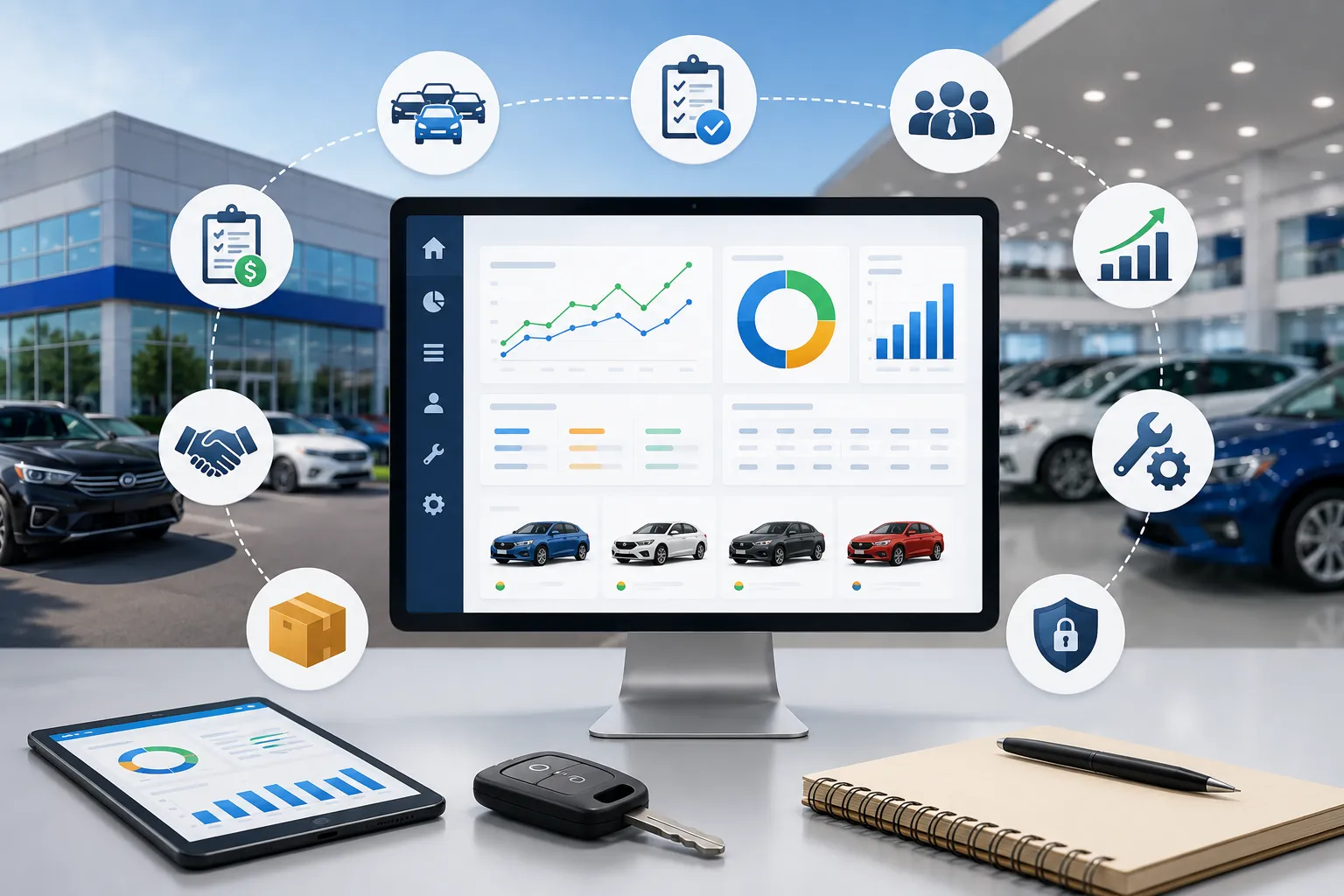
Running a successful automobile dealership involves much more than selling vehicles. Dealerships must manage inventory, track customer inquiries, monitor sales performance, handle finance and accounting, schedule vehicle deliveries, oversee service operations, and generate business reports. Managing these activities manually or through multiple disconnected applications often leads to delays, errors, and poor customer experiences.
This is why dealerships are increasingly investing in automotive dealer management software. A modern Dealer Management System (DMS) brings every department together on a single platform, helping dealerships improve efficiency, automate routine tasks, and make better business decisions.
However, not all dealership software offers the same capabilities. Before investing in a solution, it is important to understand the features that truly add value to your business.
Here are the top features every dealership should look for when choosing the right software.
1. Centralized Inventory Management
Inventory is one of the largest investments for any dealership. Without proper tracking, dealerships can experience stock shortages, duplicate bookings, or aging inventory.
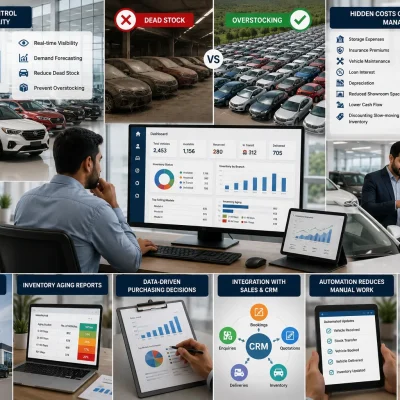
A modern automotive dealer management software should provide real-time inventory visibility across all locations. Users should be able to track vehicle availability, transfers, bookings, deliveries, VIN numbers, chassis numbers, and stock movement from one dashboard.
Accurate inventory management helps dealerships improve planning, reduce carrying costs, and deliver vehicles faster.
2. Integrated Dealer CRM
Customers expect quick responses and personalized communication throughout their buying journey.
An integrated dealer CRM software allows dealerships to capture leads from multiple sources, assign them to sales representatives, schedule follow-ups, send reminders, and monitor conversions.
A good CRM also stores customer history, making it easier to build long-term relationships and improve retention.
3. Sales Management and Lead Tracking
Managing vehicle sales manually often results in missed opportunities and inconsistent follow-ups.
The best dealership management software should help sales teams track every stage of the sales cycle, from enquiry and quotation to booking and final delivery.
Managers should also be able to monitor salesperson performance, conversion rates, and pending opportunities through real-time dashboards.
4. Finance and Accounting Integration
Sales and finance work closely together in every dealership. Separate accounting systems often create duplicate work and reporting errors.
A reliable dealership accounting software should support invoicing, GST management, collections, payment tracking, expenses, vendor management, and financial reporting.
Integrated accounting improves accuracy while reducing manual data entry.
5. Multi-Branch Management
Growing dealerships often operate multiple showrooms, warehouses, and service centers.
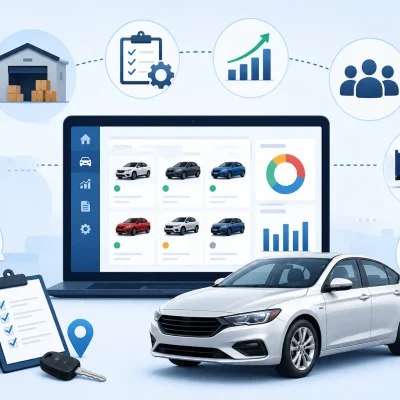
A quality automobile dealership management software should provide centralized control over every branch from a single dashboard.
Managers should be able to monitor inventory, sales performance, employee productivity, and financial reports across all locations without switching between different systems.
6. Real-Time Reporting and Analytics
Making decisions without accurate reports can lead to costly mistakes.
Modern automotive dealership software should include dashboards that provide insights into:
- Vehicle sales
- Inventory status
- Revenue
- Pending deliveries
- Customer enquiries
- Employee performance
- Branch performance
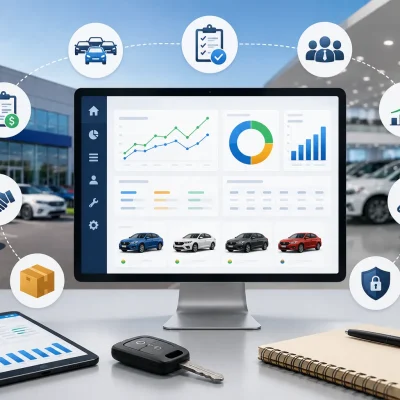
These reports help dealership owners make faster and more informed business decisions.
7. Workflow Automation
Many dealership processes involve repetitive manual work, including stock updates, approval requests, customer notifications, invoice generation, and delivery scheduling.
Automation eliminates repetitive tasks and reduces the chances of human error.
The best dealership management software should automate routine workflows so employees can focus on customer service and sales.
8. Service and Workshop Management
Customer relationships continue long after a vehicle is sold.
An effective Dealer Management System should include service scheduling, job card management, technician assignment, warranty tracking, spare parts inventory, and service history.
This helps dealerships improve after-sales support while generating additional revenue from service operations.
9. Mobile and Cloud Accessibility
Modern dealerships need flexibility.
Cloud-based dealer management system solutions allow employees to access important information securely from any location using laptops, tablets, or smartphones.
Sales executives can update customer enquiries, managers can review reports, and executives can monitor operations even when they are away from the dealership.
Cloud deployment also reduces IT maintenance costs while improving data security.
10. Role-Based User Access
Every employee does not require access to every feature.
The software should allow administrators to define permissions based on job roles.
For example:
- Sales teams should access CRM and quotations.
- Finance teams should manage accounting.
- Inventory teams should update stock.
- Managers should access reports and approvals.
Role-based access improves both security and operational efficiency.
11. Enterprise Scalability
As dealerships grow, their software should grow with them.
An enterprise dealer management system should support additional branches, users, departments, and business processes without requiring a complete software replacement.
Scalable solutions protect long-term investments while supporting business expansion.
12. Easy Integration with Other Business Tools
Most dealerships use multiple applications for communication, accounting, marketing, payment collection, and customer support.
The right dealer management solutions should integrate easily with CRM tools, accounting software, payment gateways, SMS platforms, WhatsApp, email services, and business intelligence tools.
Good integrations reduce duplicate work and improve operational efficiency.
Why DealerSetu Is Built for Modern Dealerships
DealerSetu combines all the essential features dealerships need in one powerful platform. From inventory management and Dealer CRM to accounting, finance, reporting, approvals, service management, and multi-branch operations, DealerSetu helps dealerships simplify daily operations while improving efficiency.
Whether you manage a single showroom or a growing dealer network, DealerSetu provides the visibility and automation needed to deliver better customer experiences and support long-term business growth.
Conclusion
Choosing the right automotive dealer management software is an important investment for any dealership. The ideal solution should do more than simply record transactions. It should help improve productivity, automate operations, provide meaningful business insights, and support future growth.
Before making a decision, evaluate the software based on the features that matter most to your dealership. A comprehensive solution like DealerSetu can help reduce manual work, improve operational efficiency, and provide complete control over every aspect of dealership management from a single platform.
Frequently Asked Questions
1. What is automotive dealer management software?
Automotive dealer management software is a centralized platform that helps dealerships manage inventory, sales, CRM, accounting, service operations, reporting, and customer relationships.
2. Why do dealerships need dealer management software?
It improves operational efficiency, reduces manual work, increases inventory accuracy, enhances customer service, and supports business growth.
3. What features should the best dealership management software include?
Key features include inventory management, CRM, accounting, sales tracking, reporting, service management, workflow automation, and multi-branch support.
4. How does dealer CRM software improve sales?
Dealer CRM software helps capture leads, automate follow-ups, track enquiries, monitor sales performance, and improve customer retention.
5. What is the role of dealership accounting software?
It manages invoices, GST, collections, expenses, payments, financial reports, and accounting workflows from one platform.
6. Can dealer management software support multiple branches?
Yes. Modern dealership management software provides centralized management for multiple locations with real-time reporting and inventory visibility.
7. Is cloud-based automotive dealership software secure?
Yes. Cloud solutions offer encrypted storage, secure user authentication, automatic backups, and role-based access controls.
8. How does reporting benefit dealership owners?
Reporting provides insights into inventory, sales, employee performance, revenue, and customer activity, helping owners make informed business decisions.
9. What is an enterprise dealer management system?
An enterprise dealer management system is designed for large dealerships and dealer groups, offering scalability, centralized management, and advanced reporting across multiple branches.
10. How do I choose the right automotive dealer management software?
Choose software that offers comprehensive features, easy integration, scalability, cloud accessibility, strong customer support, and tools that align with your dealership’s operational needs.